Pages

Showing posts with label Bronze City. Show all posts

Thursday, July 18, 2019

An Introduction to the Prophetess and the Way

Illustration of Canto 34 of Paradiso,Gustave Dore, 1864

How many countless hundred thousands pray
For patience and true knowledge of the Way
That leads to Him whom reason cannot claim
Nor mortal purity describe or name;
There soul and mind bewildered miss the mark
And, faced by Him, like dazzled eyes, are dark -
No sage could understand His perfect grace,
No seer discern the beauty of His face.
His creatures strive to find a path to Him,
Deluded by each new, deceitful whim,

-The Conference of the Birds by Farid Ud-Din Attar

The Master said, "When a person's knowledge is sufficient to attain it, but his humaneness does not allow him to hold on to it, he may get it but will inevitably lose it again. When his knowledge is sufficient to attain it and his humanness allows him to hold on to it, but yet he cannot govern with dignity, the people will not respect him. If his knowledge is sufficient to attain, and his humanness allows him to hold on to it, and he governs with dignity yet does not act in accordance with the rites, it will still not be good."
-The Analects of Confucius, 15:32

First there was the Lord. He is ultimate, good, merciful, terrifying, other, universally sovereign. He created all that is on earth and beyond it. He shattered his infinite being to do so. The Lord adheres in the whole creation, each part contains a grain of His infinity and the perfection of His Holiness. But all things are also separate from their maker. Everything is doomed to stray from Holiness. Self and selfishness, greed, indulgence, pride and vice arise where the essence of the Lord is first removed from Him.

 Between us and He is the Gate. The Gate is separation, the border between the world we see and the one we don’t. There may be goodness, courage, bravery, humility, but if it does not cross this threshold and return to Fullness with the Lord, it will rot away. 

 The first to turn their backs on the Lord were His Archons, the First Ones, who inherited the greatest share of Holiness. They were charged with maintaining the creation, but resentment was born in their hearts. They wished to govern their own domains where they would wield the Lord’s sovereignty as their own. They became the gods of the earth and they ruled it as tyrants do. Under such cruelty, the people of the world strayed from Holiness and they turned on each other. Animals, plants, and finally the earth and water and air followed them. War, disease, famine, disaster. These are the fruits of the Traitor-Archons’ dominion over the universe.The Traitor-Archons did not fear the Lord. They trusted the Gate to keep the cosmos in their sway. The Archons placed their fingers over it to hold it even tighter.

Despite the Gate, the Lord still holds power in the cosmos. In old Beshara He was regarded as a deity of law and contracts. He elected prophets, people who would bring the nations of the world back to Holiness. None of them overcame the Gate, but they all foreshadowed greater things to come.

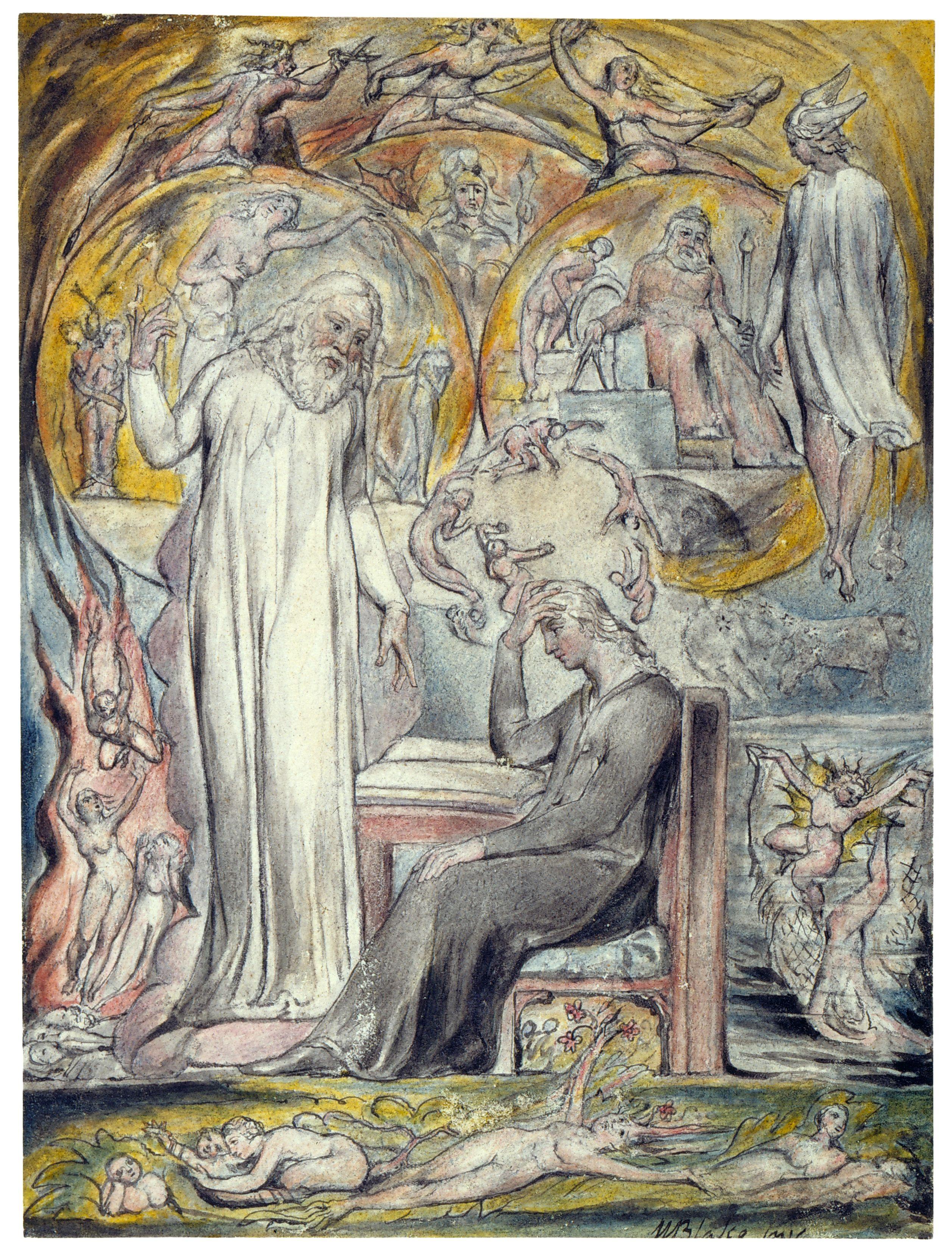
File:Beatrice Addressing Dante (by William Blake).jpg
Beatrice Addressing Dante, William Blake, 1824

When she arrives in the First Holy, the Book of Hallaj, she speaks from the background, among the craftsman and fishermen and shepherds. She is already old because she has wandered long years in exile. Her ear is pieced. It is a reminder that she was once property of the great chieftain ‘He Who Kills with a Glance.’ Her eyes have been cut out, for she spoke up for the bastard child abandoned in the desert and the supplicant denied justice in the court of Hujuz.

She calls herself Rashida. We know she is our Prophetess. She is one of the pale people of Beshara. The Lord came to her in the heart of the desert. All her wandering had led to Him, barely to the foot of His throne. He struck no covenant with her. He reminded her of Him. He gave her a phrase: ‘the Way.’

Her voice is always the same, no matter which scribe records her. She holds the Way in her mouth like a banner. She speaks with passion for the Lord and the Way, which is His gift to all the world. Her lips form graceful sentences in the old Besharan language, interlaced with the rough syllables of the tongue of the Bauda people. She denounces the world as it is, ruled by the tyrant pawns, the servants of the Traitor-Archons. 

The Way is the Lord’s plan for the creation. The Way is the formula that leads us through the Gate. The Way returns us to goodness, then to Holiness, then to Fullness with the Lord. Without it, no virtue and no truth can last on earth or beyond it. Some believe that Rashida opened the Gate herself once she ascended mount Arsir and left the world, ensuring that we could follow her. Others believe that she just slipped through the keyhole. You see, the Gate might only open from the other side and when it does only those who know the Way will be let through. 

The Way is a relationship. The creation is truly one with the Lord and it all must be accorded the respect He commands. 

The Way is a belief. It is the conviction that the self and the world can be redeemed through their own will and action. 

The Way is a practice. To stray from Holiness is our natural condition, but ritual keeps the Way in the foreground of our life and Fullness as our goal. 

The Way is all encompassing. It begins with a woman, it embraces the world. It begins with a word and a full sentence rises from it. It begins with one order of creation, the people of earth, and will move to bring the entire cosmos back to Fullness with the Lord. There is no person, no thing, no place, no time to which it is not relevant. 

The Way is a challenge. It demands our attention; it demands we bend our lives around it. It will be the measure of your deeds, your thoughts, and the deepest feelings of your heart. Your family, your community, your city, and your entire society will be held to account by its standard.

Though our responsibility to the Way and to each other weighs heavy on us, we can be assured that as long the as the cosmos retains its essential Holiness the Way will retain its infinite efficacy. But much remains unanswered. What exactly is expected of followers of the Way? What is forbidden? What will be redeemed and what will be destroyed? To whom do we pray - To the Lord? To the Prophetess? To the Way itself? When we fail in our pursuit of Holiness, where do we turn? What will a cosmos returned to Fullness look like? Is the Gate open?

Girl Reciting Qu'ran, Osman Hamdi Bey, 1880

We seek answers in the life of the Prophetess, as her voice comes down to us in the Five Holies. The books of Hallaj, Laila, Emrah, Idris, and the book of Attestations lay bare the deeds of the Prophetess and the knowledge of the Way which she imparted to her earliest assistants. We are reminded that Hallaj was once the Prophetess’ greatest opponent before his conversion. We are filled with hope. We read the tender words spoken between Rashida and Laila before they fled their enemies. We shed tears, knowing that the Way is not easy. Emrah recalls the judgments which the Prophetess gave at the city of Unah. This shows us that the Way sometimes requires as much pragmatism as conviction. Idris watches his Prophetess climb mount Arsir to leave this world behind. His grief, his awe becomes our own. We read the squabbles which occur amongst the assistants as the Prophetess shares her wisdom in the book of Attestations. We sigh, knowing that learning still escapes us.

Aged, pieced, blinded. Slave, serving girl, exile, teacher, judge, leader, Prophetess. 
Wandering, seeking, losing, finding.
Perspective, thought, belief, action. 
Self, community, society, cosmos. 
Pilgrims, commanders, merchants, mystics, princes, servents, farmers, nomads, governors, fishermen, basket weavers, artisans, scribes, builders, scholars, canal diggers, herders, parents.
All of these are joined in the pursuit of the Way. Like a canto being spoken or a tapestry woven, the Way continues on. Tomorrow may be a step toward Fullness or a stumble back to separation, but the Way will continue all the same. 

Our history stretches almost 800 years. Struggle has shaken and divided us. Compromises have been made. Power and the Way are so tangled as to be inseparable. But the spirit of our enterprise remains. The Way is strong, the Way is true, and we continue to rise to its challenge. 

St Francis with a Skull, Francisco de Zurbaran, 1630


I’ve touched on the religion of the Besharan empire before and made it a major mechanic in my last Meager Country campaign. However, I don’t think that last set of rules gives the right impression of the Besharan religion. All the sects seem like their own faiths with wildly different practices, rather than different expression of the same rich and varied religious tradition. I think my players had the same feelings. 

With this post, I wanted to take things from the top and give all the sects a more solid background to work off of. In future, I'll be add more posts detailing the sects and eventually circle back to writing more mechanics for playing priests and paladins and mystics of the Way. 

This post is dedicated to Rabe'eh of Basra

Wednesday, August 22, 2018

Meager Country Character Sheet

Here is the sheet I use to record all the things I've added to 5e, it is basic but effective

There are little boxes to check in! 


Download it here


For those not in the know, this post is part of my series about character generation for adventures in the Meager Country. Here are my wound and encumbrance rules, an introduction to the Besharan empirethe peoples of the Bronze citymy rules for practicing Besharan religion new backgrounds, and rule adjustments for wizards and sorcerers


This post is dedicated to nobody, because I can't be bothered 

Friday, August 17, 2018

Backgrounds from the Bronze City


This post is part of my series about character generation for adventures in the Meager Country. Here are my wound and encumbrance rules, an introduction to the Besharan empirethe peoples of the Bronze city, and my rules for practicing Besharan religion 

Here are some new backgrounds for Besharans of all stripes.

I honestly can't find where this image is from, I'm so sorry

Imperial Bureaucrat: These people make the empire run. They keep the accounts, schedule the meetings, enforce the law, stamp the acquisitions requests, and make the tea. The imperial bureaucracy is a large and complicated organ in which people rise based a mercurial combination of nepotism and merit.
Proficiencies: Deception, Insight. Forgery Kit
Language: Besharan
Equipment: Ink and quill, notebook, Book of Laws, 15 GP, Courtly Robes
Master of Regulations: You are always able to ‘remember’ an obscure law or regulation relevant to a decision to gain advantage on a deception or persuasion check

Sacred Ascetic: The humble life of the ascetic has been a part of the Besharan faith since its earliest days. Every sect, except Mehrebism, has some kind of ascetic tradition.
Proficiencies: Religion, Survival, Herbalism Kit (you are forbidden from owning a herbalist’s kit)
Language: Besharan
Equipment: Begging Bowl, itchy linen robes, The Empty and Invisible Crown of Holiness, A bag of -30 GP
Valued Wisdom: You are respected for your wretchedness, people will be happy to give you money and food in exchange for your musings about the secrets of the universe. Even the highest of the high would be happy to meet you to entertain you in their home.
Vow of Poverty: You cannot own anything more than your starting equipment, a single simple weapon, and your rations. You must borrow everything else as you need it. If you can perform miracles, you may ignore one of the two practices you maintain.

Missionary: Though miracles are impressive, there are other ways of spreading the faith. Compassion, generosity, and a whole lot of sermons often work. Missionaries usually refer to themselves as “Lovers of the Word.” The Sultan funds the efforts missionary of numerous organizations, as a way of spreading Besharan culture.
Proficiencies: Religion, Performance, A Musical Instrument
Language: Besharan
Equipment: Book of Holy Scripture, 20 GP, Holy Symbol, well worn travelers clothes
Righteous Sermon: You can give an inspiring speech which can hold a friendly audience’s attention for about 10 minutes. It will probably leave listeners invigorated but confused. “How is Master Faridun a liar and an honest man at the same time? It makes no sense!”

Fire Cultist: Though banned everywhere, the followers of the Fire Gods persist. They can barely muster miracles of their own but hope to one day reignite their extinguished patrons. Fire Cults are often involved with criminal activity, besides fire worship.
Proficiencies: Religion, Deception, Disguise Kit
Language: Kerzerkian
Equipment: A dead coal, 15 GP, holy symbol, leather robes
Confounding Defense: If accused of fire worship, you know how to deliver a confusing defense of yourself which is full of logical fallacies and shameless attacks on the Besharan faith barely concealed by rhetoric. This won't trick the same person twice.
Know the Signs: You can recognize other fire cults and cultists by their secret codes and symbols.

Slave Officer: The officers of the slave army are taken from families all over the empire as children and trained in tactics, writing, courtly manner, and leadership. It is a great honour to be chosen to become an officer, some even buy their children into the order. Slave officers are expected to be completely loyal to the Sultan and never marry.
Proficiency: Athletics, History, 1 martial weapon of your choice, a gaming set
Language: Besharan
Equipment: Ceremonial dagger, 30 GP, Feathered Ceremonial Helmet, a chess set

Chains of Command: You have a superior officer who you report to and who can provide information and support if need be. Those serving under you have more respect for you.

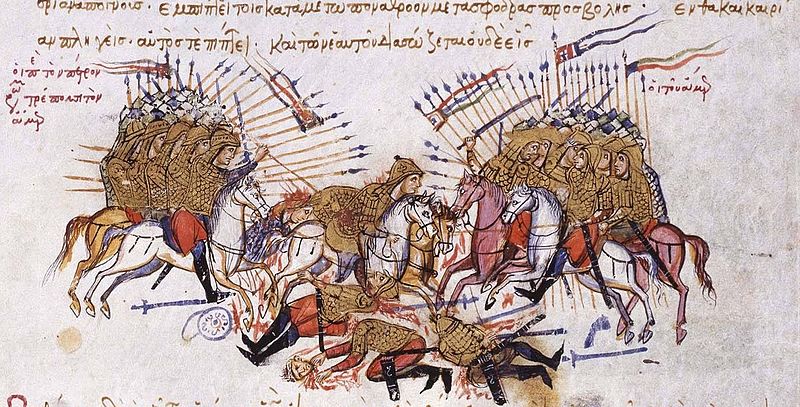
File:Fighting between Byzantines and Arabs Chronikon of Ioannis Skylitzes, end of 13th century..jpg
Source

I think these are pretty ok backgrounds, most of them could use a second draft.

This post is dedicated to Peter von Bagh, because I was thinking about him today

Everyone's a Priest: How to Practice the Besharan Faith by rolling on tables


This post is part of my series about character generation for adventures in the Meager Country. Here are my wound and encumbrance rules, an introduction to the Besharan empire, and the peoples of the Bronze city

So I'm constantly disappointed by how religion is portrayed in RPGs. It's been noted before, clerics don't preach or gather a flock, few religious holidays or festivals make it into games. I find this disappointing, religion is a fascinating category of human activity and experience which has inspired conflicts that are fertile ground for RPGs to explore. I think the way gods are imagined has something to do with this problem, they are concrete and distinct, mythology and history are interchangeable. I want mystery, I want faith, I heresy, I want theological debates carried out by enraged angels in the town square. Here is my attempt to integrate religion better with the classes of 5e.

Icons are good too
Let me tell you about the Besharan faith. Monks, Clerics, Warlocks, Paladins, Bards, Rangers, and Druids all gain their ability to cast spells from God. God is singular and infinite. Warlock patrons are just higher beings in the divine hierarchy: saints, angels, bodhisattvas, prophets. Bards are divinely inspired poets. 

There was once a single Besharan faith, our calendar begins on the day our beloved prophetess, Yukfa, was recalled to God's side and ascended into the sky. But now, in the year 681, the faith has diverged into a million warring sects. 

Nobody can agree on what God wants or even what she looks like. There is constant debate, a million theologies running in every direction. Thousands of saints, dozens of prophets, countless enlightenments, a million types of incense burning, and so many schisms that it would be reasonable to assume each person had a complete religion unto themselves. 


 Some sects only disagree partially. They believe a ritual is conducted incorrectly, that a certain figure is a saint and not a demigod. Most sects hold a number of Besharan texts, the 5 Holies, to be sacred. Of course, there are always arguments over which passages are interpolations, which books have been left out of the set. The book Tanfa of  has always been controversial.

Each of the major sects have distinct ritual traditions, a code to unlocking the powers of the divine. There is no consensus on why these rituals work. They please God. They draw the attention of the saints. They carry within them mathematical perfections which make a person sinless only for a moment, thus allowing the power of the divine to flow through them from the 7th Heavenly Garden. This is sure though: you usually need to believe in the ritual for it to work

Not all practitioners will be granted power though. Most Ascetics can levitate by mediating, but only 1 of every 8 can cast cure light wounds. Some sects’ priests show no evidence of divine power until their cults have grown in size. Some people are granted power through one sect and not another. Some sects’ practitioners can do things which other sects’ followers cannot. This causes a great deal of consternation.

The sects abandoned public debate long ago, now they compete to perform more spectacular miracles for awed crowds. Today the Faridunists turn a hundred sheets of vellum into 99 doves, each with sacred poetry on its wings. The next day, the Magists shed the blood of lambs on a grove of olive trees, which all begin to bear delicious fruit. Then, the Uudunites cure a man of his blindness, beat him to death, raise him from the dead, and then smash his skull in just to prove a point.

Sect and Practices: Making a Divine Spellcaster
There are 5 major sects and each has several sub-sects. Roll a d6 to determine your sect and choose a class/sub-class from their list of sect practitioners. Roll a d4 to detirmine your sub-sect, or a d8 if you're part of the Unorthodox group.

To cast spells and use divinely given abilities, you need to follow both a regular and irregular practice. To determine which ritual practices you must maintain, roll a d6 or a d4 depending on your sect for your regular practice and repeat the process for the irregular practice.

If you fail to follow any one of your practices, you lose the ability to cast spells. If you fail to maintain both, you lose access to all your supernatural abilities (i.e a Paladin's divine sense or a Monk's chi points). Feel free to multiclass, though that's definitely heretical.

Feel free to just choose your sect and practices too. If you want, you can mix and match practices from different sects to create your own new religion which is superior to the rest. Invent your own doctrines! Excommunicate your own heretics! 

An example for the confused:
1. I roll a d6 and get 4,  I'm a Magist and I choose to be a Bard
2. I roll a d4, I'm an Intercessor now
3. I look at the practices, rolling a d4 for my regular practice and a d6 for my irregular one
4. I get a 3 and a 2, I need too lash myself with a whip daily and wear a heavy chain
5. Putting that together, I am an Intercessor Bard who gets their powers from self flagellation and weighing myself down
6. I love God, she is a cruel but wonderful mistress. My groans of pain uplift my fellows


1-2. Orthodox sects

Shared beliefs: God is a huge serpent, eating his own tail. God’s teachings were revealed to the prophetess, Yukfa. The 5 Holies record his teachings. God wishes us to grow mentally and spiritually through the reading of his holy word and to devote ourselves to understanding him.

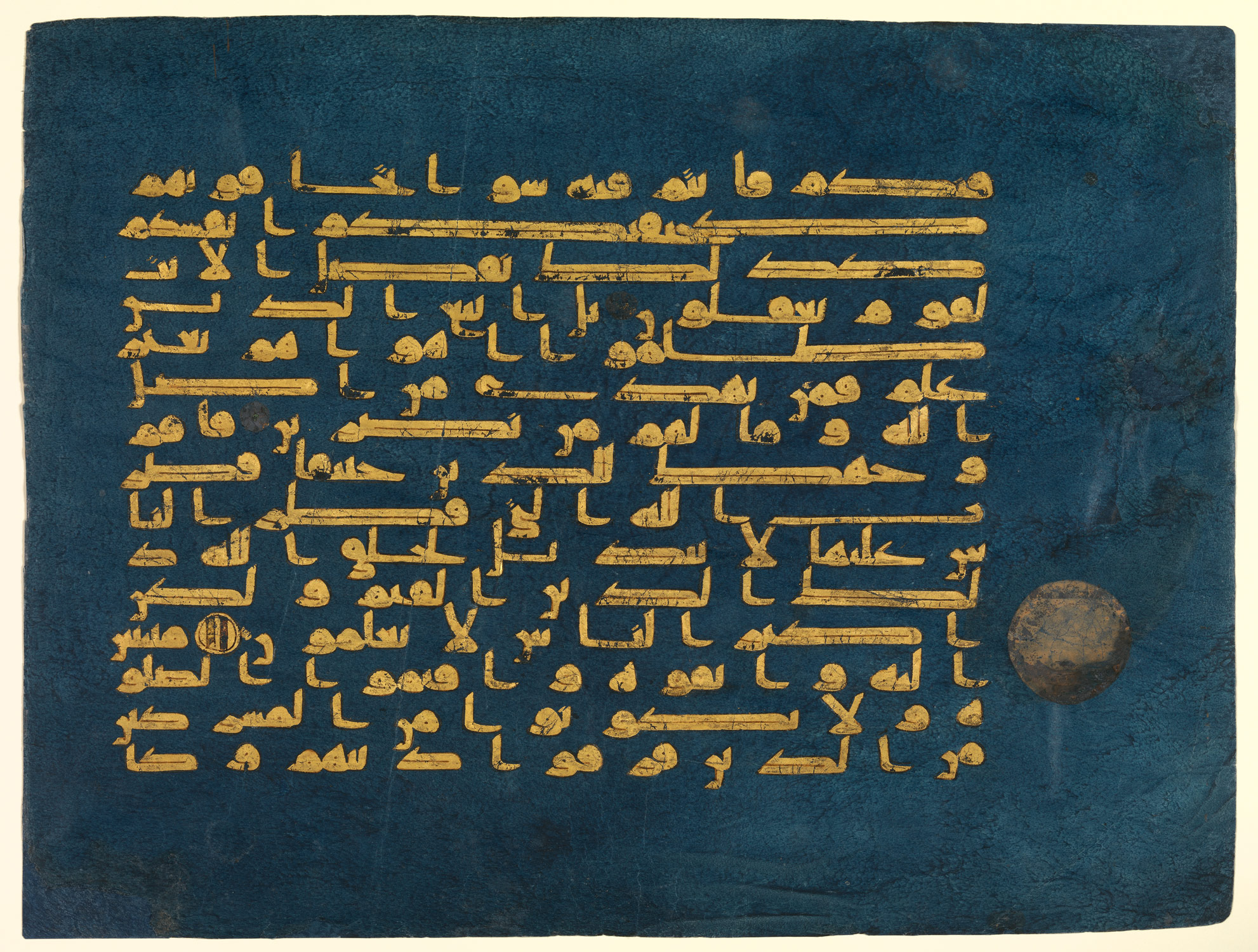
Image result for the blue quran
We do not worship God, but his mystery

Practitioners: Arcana or Knowledge Clerics, Oath of Ancients Paladins, Monks

1. The Way of Blue: To know truth is to touch the mind of God

2. The Way of the Shell: To abstain from worldly pleasures is to become closer to God

3 Triarchism: God has 3 aspects: the male serpent, the female heifer, and the hermaphrodite octopus

4. The Yukfa-ites: Yukfa is either part of God or married to God

Regular Practices:

1. Mediate 3 hours a day

2. Sing the psalms of praise at sunrise and sunset

3. Pray 4 times a day
4.  Spend 3 hours a day copying and illuminating passages from the 5 Holies
5. Give a sermon to a crowd every 3 days or more
6. Paint your skin with holy scripture every morning, wash it off at night
Irregular Practices:
1. Fast one week of every month
2. Cut out your eyes after memorizing the 5 Holies perfectly
3. Wear bells or jingling metal at all times.
4. Never eat meat
5. Instruct a pupil in the proper reading and reciting of the 5 Holies
6. Wear long, trailing robes covered in holy scripture and never let God’s word be sullied

3. Faridunist sects
Shared beliefs: God appeared to Faridun and taught him 9 Sacred Doctrines. Faridun saw God as a burning wheel, covered with eyes. By performing certain rituals, one can reach paradise. God calls upon us to live in accordance with their doctrines.
Related image
The way is open and you must follow
Practitioners: Light or War Clerics, Oath of Devotion Paladins, Fiend Pact Warlocks

1. Orthodox Faridunism: Paradise awaits those who find it within themselves
2. Maanism: The Demiurge created the evil universe which God will save us from
3. The 9 Spoked Wheel: God rewards those who spread its doctrines
4. The Church of the Raised Hand: To exercise power is to reach towards paradise

Regular Practices:
1. Anoint yourself with oil every day before dawn
2. Confess your inferiority to a holy stone everyday and dispose of it
3. Wash yourself in a purifying bath everyday with special soaps and oils
4. Erect a shrine to God or its saints and consecrate it every 3 days
Irregular Practices:
1. Share a sacred meal with at least one other Fardunist every week
2. Present an offering of food or incense at a shrine of God or God’s saints once a week,
3. Drink and eat in excess before purging yourself weekly
4. Never lie
5. Only use weapons which deal piercing damage
6. Wear a colourful prayer windmill to channel the energy of the universe

4. Magist sects
Shared beliefs: God created the universe as an accident and takes pity on it. God is a winged woman wearing a crown of flowers and iron. She revealed herself to the Magi of Tamania by sending them a series of angels whose many questions they could not answer. God united the Magi to spread her message of humility, mercy, and love.
Image result for islamic raphael angel
All shall be fed by her hand alone
Practitioners: Life or Tempest Clerics, Bards, Oath of Devotion Paladins

1. Orthodox Magism: God commands us to do as little harm as possible to creation
2. The Angelists: Free will is an illusion, each person has a personal angel who makes them act
3. The Intercessors: God wishes us to provide for others and sacrifice ourselves
4. The Cult of Lilies: God’s mission is to create a utopia without suffering on earth

Regular Practices:
1. Let blood daily over an effigy of God
2. Perform sacred exercises on a carpet depicting God or her angels at sunrise everyday
3. Give yourself 8 lashes from a whip everyday
4. Spend 2 hours creating a beautiful mandala in the ground every morning, then destroy it
Irregular Practices:
1. Perform an act of self sacrifice or mercy which disadvantages you every week
2. Wear a heavy chain at all times
3. Never shout
4. Always show hospitality and grant mercy
5. Always wear a crown of fresh flowers
6. Only use bludgeoning weapons


5. Aesthete Sects
Shared beliefs: God is the ultimate craftsman who created the 3 and 3/5 forms upon which the universe is based. God’s appearance is dependant on they who observers it. To cultivate, create, and understand beauty is to become closer to God. Nobody is sure how the Aesthete sects were founded. They just appeared overnight. They attribute this to God’s providence.


Image result for neoplatonism
The cosmology is complicated but the life is simple

Practitioners: Nature or Forge Clerics, Bards, Celestial Pact Warlocks, Oath of Vengeance Paladins

1. The Acolytes of the Gilded Crown: Wealth is beauty and to possess it is to know God
2. The Friends of the Pipe: Beauty must be useless or it is just fancy ugliness
3. The Azarites: Beauty is utility and the fulfillment of want
4. The Way of 3 Pillars: Beauty reveals itself through labour and hardship

Regular Practices:
1. Cook a delicious meal every 3 nights
2. Spend 2 hours everyday making something beautiful
3. Conduct some kind of research into the natural world for two hours a day in order to expose creation’s inner beauty
4. Smoke a pipe 6 hours a day
Irregular Practices:
1. Wear gaudy makeup everyday
2. Write a poem every week
3. Always dress in finery
4. Fight only with spells and cantrips so as not to lower yourself to a baser form of combat

6. Unorthodox sects
Shared beliefs: None. All are regularly accused of fire worship or being a dragon cult. They are grouped here for purely bigoted reasons.

1-3. The Uudunites: God is an unimaginable void, the great roiling chaos which sleeps behind our eyes. Fear God and embrace death. No matter how many times their cult is destroyed, the Uudunites always manage to return under a different name.

The Name is Nothing. The Place is Nowhere.

Practitioners: Monks, Great Old One Pact warlocks, Trickery or Grave Clerics

Regular Practices:
1. Spit on the temple of another sect/religious group every 3 days
2. Swallow a mouthful of ash everyday and savor it
3. Insult a stranger every 3 days or more
4. Roll in filth daily
Irregular Practices:
1. Wear a featureless white mask
2. Cut out your own tongue
3. Debase yourself before an audience weekly
4. Make yourself sick, poisoned, or exhausted at least once a week
5. Formulate a plan to commit suicide in public every week
6. Gain a wound and let it fester (God will protect you from disease, that cruel bastard)

4-7. Simurghism: God is the Simurgh, Queen of the Birds. She is the infinite perspective, the fractal mirror. She flies in all directions at once. She appeared to a nameless prophet who was consumed by holy fire and dictated his revelations from the flames until he was only ash.
The Universe rests on her wings
Practitioners: Bards, Archfey Pact warlocks, Trickery or Tempest Clerics

Regular Practice:
1. Eat a bird feather every day with dinner
2. Buy new jewelry or fine goods every 4 days
3. Never pass up an opportunity to overindulge in drink or drugs
4. Turn towards the Garden of Earthly Delights (i.e every direction) and pray nightly
Irregular Practices:
1. Go on a binge for 4 days every month
2. Shatter a mirror every week and throw the shards in the 4 cardinal directions (i.e up, down, left, and right)
3. Eat a songbird whole every week
4. Wear a crown of feathers as long as the sun is up, gather new feathers every week

8. Mahrebism: God is everything, or maybe just a lot of nature spirits. Do whatever feels natural, or is traditional. Mahreb appeared before the Emperor in the year 87 and secured the continuation of the Bauda's practice of their traditional religion, but the provision has been extended since then.

Practitioners: Druids, Rangers

Practices: You only need to maintain 1 practice, if you fail to do so you only lose the ability to cast spells
1. Sacrifice an small animal every week or a large one every month
2. Carry an effigy of “God” on your back and make sure it is always properly dressed and taken care of
3. Keep a sacred animal with you, treat it like royalty
4. Built a bonfire and burn fine clothes and fine food in it every week
5. Destroy 10GP in jewelry or fine goods as a sacrifice every week
6. Perform an elaborate dance or song for a small effigy of God every day


Luckily, we can all agree that some religions are bad and evil.
-Fire worship, the veneration of the extinguished gods, is strictly forbidden.
-Dragon cults must be stamped out. Every so often, some idiot gets their hands on an old dragon bone and the Slave Army has to have a regiment spend months crushing kobolds underfoot.
-Spirit worship is technically banned but continues on in the form of Mahrebism

Commentary:
So I really like this system. I like that it spits out a unique combination of sects and practices, showing
the strange diversity of Besharan religious traditions. I think this system also brings the assumed
magic level of 5e down a bit, which I also like. I use a calendar to keep track of in-game days
and mark the days when ritual practices have to be followed so all the players know when
they have to do their practices

This post is dedicated to Walter Burkert, who taught me about ritual traditions 

Thursday, August 16, 2018

The People of the Bronze City

This post is part of my series on my Meager Country campaign and how I've handled rules changes and character creation for it. This post will make more sense if you've read about the wound and encumbrance systems I use. I wanted all the changes I made to 5e to be integrated, so no part of the game felt like it was tacked on. The way exhaustion works in 5e is like this, it's treated like an after thought and hardly referenced by the other rules. 

I wanted everybody coming to the Meager Country to be strangers to it but I wanted strange strangers, so here's a bunch of new types of people to play.


I should also mention why I use the word people instead of race. One, the word race is so loaded and implies ideas of hierarchy or that one kind of person is default. Two, race doesn't apply at all to a group of varied species. Three, even species is a poor descriptor, there are lots of species of creatures you don't usually play in RPGs. Instead what unites these groups, what is important about them is that they are all people. They come in many shapes and sizes, not all are even made of flesh, but at the end of the day the best way to understand them is as varied types of people, not different species and certainly not different races. Really, the only issue with the term people is that sometimes it's a bit awkward grammatically. 

These are the people of the Bronze City. 


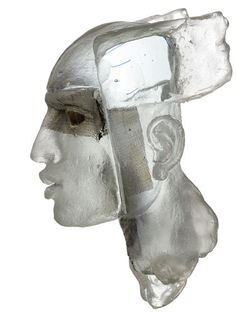
The Women of Glass
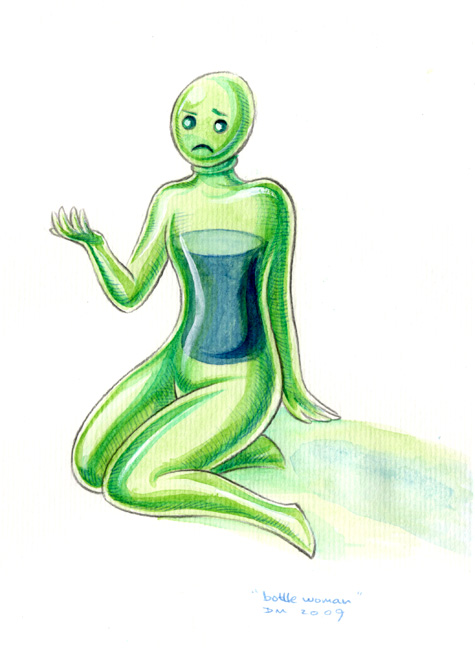
The Women have flesh made of semi-transparent glass which comes in a variety of colours, inside they are filled with a colourful, churning stew of molten glass which spills out of them when injured, cooling into bulbous scars. They all look somewhat feminine, though they come in many different shapes and sizes with different features, different glass hairstyles. Additionally, they are all gifted with foresight which allows them to foresee tragedies in the far future.
Considering herself 
Women live forever, though the secret of their creation has been lost and they all know that their shattering is constantly drawing closer. All the Women know each other, as they are all sisters. Many of them have risen to high positions in the imperial bureaucracy. Others devote themselves to sculpture and glassworking, hoping to rediscover the art of making Glass Women. More decide to live lives of risk and danger as merchants, pirates, and adventurers as a way of seeking their own shattering. Every Glass Woman has a name subtly carved on the back of her neck in a language nobody understands. The Women instinctively know what that name is, but not all of them go by it.

Women of Glass traditionally live on the shore of the ocean of pearls in the skeleton of a massive coral reef from an earlier age. Their communities are littered with pieces of glass statuary. Some are imitations of lost friends, some attempts to create a new generation.


Women are often described as thoughtful, mournful, solitary, well spoken, petty, unempathetic, selfish, patient, cooperative, distant, unemotional, forgiving, overemotional, perfectionistic, and indecisive.

Broken but unbowed

Languages: Besharan, Glass Talk, Speed: 30ft
-Have resistance to piercing, fire, and poison damage
-Are vulnerable to bludgeoning and force damage
-Roll at -2 on the wound table but all wounds are permanent (rolling 0 or less does not garner a wound)
-Can make a wisdom check to predict tragedies in the far future once a day
-Glow gently, casting dim light in a 5ft area
-If you roll 18 or greater on a history check to recall information on a historical event,
you were there and still remember what happened
-If you’ve eaten a lot of sand, you can vomit a gout of molten glass as a reaction to being struck by an attack once per short rest/long, treat as if you cast Burning Hands with constitution as your spellcasting ability

(A note on making rulings for Glass Women: Think of them as alchemical engines. Potions and other magical components effect them, but when alcohol or some other purely chemical compound is introduced to their system it just burns. They get sick too because sickness is caused by evil spirits, not by little organisms. When I resolve tragedy checks, I try to describe threats which might be ahead in dreamy and unsubstantial ways.)


The Lagash of Kerzerk
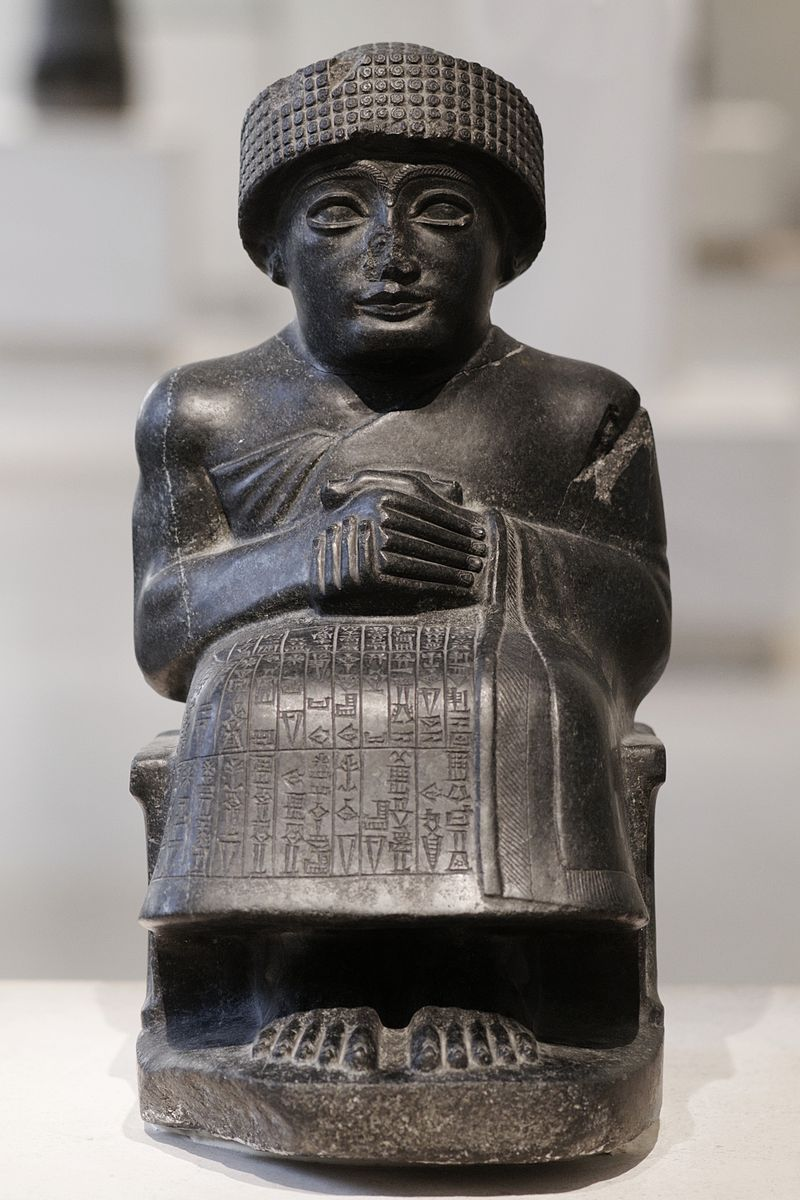
They are the pillar builders, the ash eaters, the slave masters, the accomplished pagans. Their skin is jet black, their hair ebony. Even their bones and organs are tinted shades of gray and charcoal. Their eyes, however are gold, green, and blue. Most are somewhat short, standing between 5’ and 4’ tall. Lagash men either shave their beards completely or decorate them with beads and gold thread. Women wear their hair up in turbans dyed dark colours.
Of course all their art is made of diorite


The Lagash feel a near constant compulsion to keep their hands busy. Idle hands, after all, are a sign of an idle mind. Some whittle wooden trinkets or cut rough pieces of obsidian into more pleasing shapes. The nobility play with Besharan meditation orbs and richly decorated puzzle cubes. Above all, they enjoy smoking the dried leaves of Kerzerkian flowers in long ivory pipes whose fumes are poisonous to other peoples.


Kerzerk is a harsh country defined by three marshy rivers and unpredictable floods. It was incorporated into the Besharan empire recently, only after years of war. The Lagash have had trouble integrating into imperial society. They are not allowed to become officers in the Slave Armies and few have risen far in the imperial bureaucracy. However, their skills as architects and artisans have earned them acclaim.

More importantly, the Lagash are still suspected of fire worship. Their priest-kings converted to the Besharan faith. Missionary efforts have succeeded. But whenever a cult of a blasphemous fire god is discovered, the Lagash are always implicated.

The Lagash are often the butt of jokes. They are stereotyped as being shrewd, diligent, cynical, untrustworthy, anxious, calm, introverted, cunning, obsessive, intense, speaking poor Besharan, and eating bland food.

Languages: Kerzerkian, Speed: 25ft
-Become immune to a poison after being exposed to it three times
-Gain advantage on saves against being knocked prone and disarmed
-Can automatically tell what opinions others have about them

-Opportunistic, when making a weapon attack with advantage, increase the damage die of your weapon by one size (d4 -> d6 -> d8 -> d10 -> d12 -> d12 + 2). Cannot deal non-lethal damage

The Bronze Folk
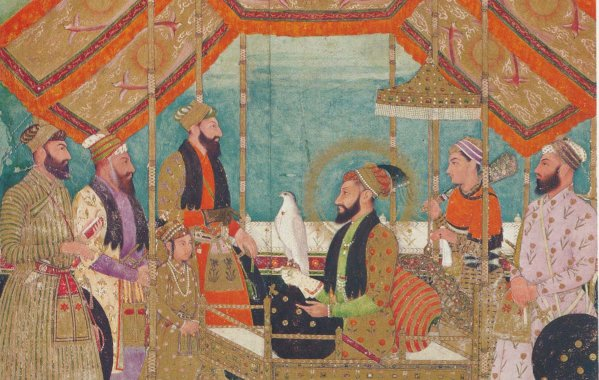
They are a ambitious and capricious people. Their skin is the colour of copper, but tans in dark, bronzy shades. Their hair is black, ginger, or a shade in between. Generally, they are 5’ tall, give or take a few inches. They hang on, in small and large ways, to their formerly nomadic way of life. They still prefer wearing loose pants, as opposed to constricting robes. Both women and men are taught how to string a bow and ride a horse. Poorer families happily sell their children to the merchant caravans, just so they acquire the skills of the saddle.

Court is best held in the garden

The Bronze folk are proud of their long and storied past. Their history was once described in a vast oral tradition which recorded the names of kings, the victories of Faridun and Sellum, and the many conflicts which have divided the Bronze folk in the past. This tradition is quickly dying and slowly being recorded and illustrated. Still, all the best routes across the Silent desert and through the mountains of Beshara are passed down by word alone.

They consider the Bronze city their official home. In the year 431, the Sultan of the Bronze Palace led a revolution against the Pale Folk, wresting control of the empire and moving the capital to the Bronze city.

The Bronze folk are known for a love for horse races, a more than passing interest in camel races, telling tall tales, being easily distracted, having some money invested in the caravan trade, having good senses of humor, and their skill in archery. All the best archers this side of the Sea of Pearls are Bronze folk.

Languages: Bronze Speak, Besharan, Speed: 30ft
-Alert, gain a saving throw to avoid being surprised, roll d20 under wisdom to succeed
-Attacks made with short and long bows crit on 19, 20
-Can sheath one weapon and draw another as a single free action
-Every community the caravan runs through has a Bronze Folk hostel where gossip can be exchanged and the food is cheap. Larger settlements have a Caravan House, where money can be deposited and withdrawn at another branch.
-Are owed a small favor by the merchant caravan, worth about 10GP
-Can give a 10 minute speech once a day to up to 6 friends to fill them with vigor (gain 1d6+ level temporary HP for a hour) or nihilistic fervor (advantage on attack rolls but -4 AC, being struck removes this effect)


The Pale Folk of Beshara
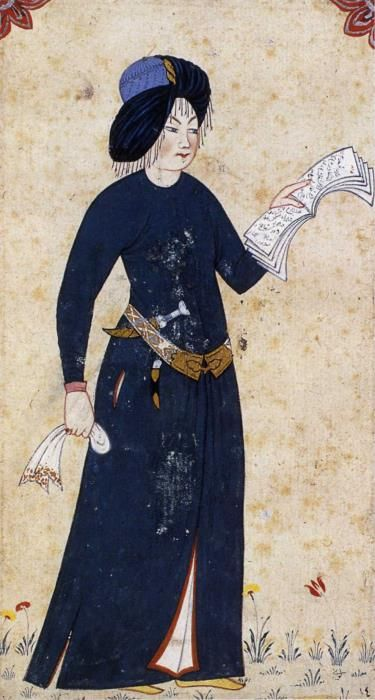
The Pale folk live in the mountains and valleys of Beshara. Their skin ranges from being a pale blue to an ashen white in colour and they are completely hairless. They are rather tall, with most being just under 6’. When the moon is full their flesh becomes semi-transparent, nobody knows why. The Pale folk take religion seriously. They are all well versed in the 5 Holy texts of the Besharan faith and can recite most of the psalms verbatim.

The Pale Folk dress in simple white, black, or dark blue robes decorated with flowing lines of holy scripture. Both sexes wear black or silver eyeliner. They enjoy words games and puns which only make sense in old Besharan dialects and have excellent singing voices.

I feel bad for just taking this from Against the Wicked City,
 but it's everything that I imagine the Pale Folk as

Many Pale folk become Blind Monks or Ascetics and view the empire as corrupt and failing. A few are desperate to become martyrs. They pursue missionary work and train as holy soldiers. Pale folk are also respected scholars and serve as educators and cultural ambassadors for the empire.They make poor bureaucrats otherwise.


Currently, the nobility of the Pale folk are in hiding. Many believe they’re living somewhere in the network of caves beneath the Sacred Mountain, but the Sultan would risk widespread condemnation if she violated the mountain’s sanctity.

The Pale folk have a reputation for being obtuse, argumentative, arch, proud, humble, creative, enjoying tea far too much, killing the mood at parties, getting worked up over nothing, and writing poetry.

Languages: Besharan, Speed: 30ft
-Gain the ability to smell magic by concentrating. This ability can distinguish between arcane and divine magic. Curses smell exactly like oranges.
-Can hold their breath for twice the normal length of time
-Only require 5 hours of sleep to gain the benefits of a long rest
-Once per short/long rest, can take 2 bonus actions on their turn instead of 1
-Have a 2/10 chance of remembering a parable or saying which is vaguely relevant to the situation at hand
-When the moon is full, roughly 5 days of every month, you have sunlight sensitivity

The Clay People
Originally, the Clay people were slaves in Kerzerk but have spread all through the empire. Their skin is a muddy cream colour, usually covered with lighter and darker splotches. Their hair is usually blond or light brown and they have dull silvery pupils. The Clay people grow ivory horns, some small, some long. The older Clay people have had their horns cut but the younger generation take great pride in their horns. They enjoy the high arches of the Bronze city, they no longer have to stoop at every doorway. In Kerzerk, there are still pieces of old Clay Person ivory for sale.

Face of a Canal-Digger
The Clay people have quickly integrated into the empire after Kerzerk fell and they were freed from enslavement. They easily picked up the common languages of the Besharan empire. They’ve become passionate defenders of many different branches of the Besharan religion.
At the same time, there is also a movement within the Clay people to revive their traditional culture. They take care to record the old songs sung while digging the Lagash’s canals and building their ziggurats. They decorate their horns with strips of blood soaked cloth and pieces of agate and onyx. They wear nothing but loin clothes and sit under the midday sun for hours.

The Clay people are known for keeping secrets, being friendly, approachable, accepting, mysterious, eccentric, rude, lethargic, and drinking too much.

Languages: Kerzerian, Speed: 30ft
-Tireless, only feel the effects of exhaustion after acquiring 2 exhaustion points
-Can gain advantage on a skill check they aren’t proficient in or on an attack roll with an weapon they aren’t proficient with once a day.
-Learn new languages twice as fast
-Have horns if charisma is 11 or more, higher scores mean bigger horns
-Have innate spell casting if they consume a mixture of crushed ivory or amber and fresh blood every day for at least a week. If their horns are cut they lose this ability. The greater the amount of ivory/amber and volume of blood ingested, the more spells a Clay Person can cast.  Consuming 3 GP of ivory/amber + 2 HP of blood allows one to cast Hex once a day. 6 GP and 4 HP allows one to cast both Hex and Blur once a day. 12 GP and 6 HP allows one to cast Hex, Blur, and Clairvoyance once a day. Charisma is used as the spellcasting ability for these spells.

The Pomroy
They may be foreign, but they are mighty. The Pomroy stand tall, regularly reaching 8’. Their skin is the colour of ivory or marble. The Pomroy heal quickly. Their wounds fill with a purple fluid which leaves colourful scars. Men and women wear their hair, the colour of molten gold, in long manes or braids which often trail behind them. They find all other kinds of body hair disgusting and shave regularly. Often, they are made to keep their hair in large turbans for the sake of decency.
The taming of Drakes

The Pomroy tell strange tales about their homeland. They recount battles fought by soldiers riding great hogs to inspire fear in drake-cavalry. They describe how magic is practiced by making pacts with fossilized trees. Sometimes, they even seem to refer to the peoples of the Meager Country. What is referenced most often is a plague of petrification that has driven many of the Pomroy abroad. Some are desperate to return home, others less so. They generally dislike the heat.

Many of the Pomroy have sold themselves to the Slave Army, a few have become officers. They have difficulty understanding the tactics the army employs. Some have integrated into imperial society as merchants or raise families in the margins of the Bronze city, taking small jobs as they come and never knowing when the next meal will be. Pomroy princes and scholars, dressed in red robes and fine-smelling wreaths, have been able to win the favor of the court by gifting them with fine red pottery and crossbows. Both have become a huge fad with the elites.

They have a reputation for enjoying drinking contests, skill in sword duels, being boisterous, brave, earnest, convincing, overbearing, sloppy, extroverted, and betting too much on horses races.

Languages: Pomroy patois, Speed: 25ft
-Roll all hit dice with advantage when regaining HP
-Require double the amount of food to sustain themselves
-Can automatically make either a charming or intimidating first impression.
-Gain advantage on all checks to grapple or disam others
-Grudges, if something or someone gives you a wound, you can write a scar on your character sheet with the name/description of the creature/person which wounded you. After, you gain +2 to all d20 rolls made while trying to kill (not subdue) or stop yourself from being killed by the creature.
-Can spend 1HD to regain hit points when dropped to 0 HP, once per week

The Bauda, or Between People
The last people of the empire to continue the long tradition of nomadic life. Their skin is a dull red colour and rough to the touch. Their fingernails, bones, and teeth are flecked with gold. They fear being dismembered for a profit. The Between people wear heavy robes and keep their faces covered most of the time. Each has a linen belt whose large circular buckle records their clan affiliation, name, and titles. They are 5’ tall on average.

Some Between people clans work alongside merchant caravans. They’re relied upon to lead  caravans through the summer sandstorms. The Between people are also respected treasure hunters and regularly bring all manner of strange trinkets, dragged from the desert sand, to Great Market of the Bronze city. The Sultan trusts certain respected Bauda clans to transport newly minted coins across the empire.

Times are good, robes more colorful 

The Between people keep large herds of goats with them and ride flightless Naema birds which can detect oases. They practice Mahrebism, a form of Besharan religion which is merely tolerated by the empire. Their priests perform animal sacrifice and swirling dances in colorful robes. All Between people are expected to travel to the ‘heart of the desert’ alone once in their lives. Some acquire the ability to cast spells from this journey. It is a great honor to have a desert magician in one’s clan.

The Between people have a reputation for having long names, raising large families, being blunt, careful, loyal, treacherous, selfless, unapologetic, awkward, wise, making bloodpacts, and using crude language.
Languages: The Desert Tongue (can only be spoken with a mouth full of sand), Speed: 30ft
-Can concentrate to sense the presence of metal 60ft from them. You know the type of metal and its direction
-Require half the normal amount of food to sustain themselves
-Can’t swim
-Start with a random, semi-useful, trinket
-Can take 2 reactions per round of combat, rather than 1
-Gain 2 extra inventory slots

The Tamani
The Tamani live to the west of the Besharan mountains. Their domain extends to the end of the empire. Their skin comes in shades of dark green and their curly hair is usually black, though they often dye it pastel colours with sticky tree resin and components bought from merchant caravans. The Tamani have purple or orange irises and are known for being broad shouldered. They wear necklaces of pearls or seashells as a sign of status.


The Tamani were the first people to be conquered by the Pale Folk. The institution of the Slave Army was based on how the old Tamani queens organized their military, minus the fact that all their generals, male and otherwise, were married to the queen. To this day, many of the officers and generals of the Slave Army remain Tamani. Despite adopting Besharan dress and religion, the Tamani have kept their language alive. Their scholars translate hundreds of books and documents into Tamani and continue to write treatises and novels in their own tongue.

The Tamani are respected for their skills as craftsman. All the most delicate woodwork is made by Tamani masters, though with Bronze folk designs. The most wondrous items in the Sultan’s possession are created by Tamani wizard-artificers. Tamani mosaics cover the floors of the empire’s elite.

A memory from before the empire


In the oasis cities of Tamania, hot forests grow thinly on poor soil. Beggars sit atop the toppled effigies of the fire gods as dogs in golden collars share the scraps thrown by priests in gray robes. Rain is collected in great basins to feed the gardens of Tamani homes. They cultivate red aloe to brew sweet liquor. Only the ascetics deny themselves the thick, intoxicating drink.

The Tamani have a reputation for having irrational fears, biting off more than they can chew, being shameless, observant, self-disciplined, excitable, sarcastic, and making friends easily. Most Tamani have a pet dog.


Languages: Tamanian, Besharan, Speed: 30ft
-Shrug off, are not negatively affected by minor wounds until they have 2
-Immune to water borne illnesses
-After using the dodge action, the effects last until the end of your next turn
-Gain advantage on checks to determine the age, origin, or value of art objects and woodwork
-Can climb trees without needing to make an athletics or acrobatics check

Credit where it's due: The way I've laid out the information in this post and many of the people's traits, the are adapted from Arnold K's excellent I Killed all the Humans. I hope you, gentle reader, are able to see this as a adaptation rather than theft. I promise things will only get more original from here.

This post is dedicated to Wen Zhenheng, who, like me, took great interest in useless things