Pages

Sunday, April 7, 2019

Mechanics for a Viking Campaign


I've decided that my Viking Campaign (better name tbd) will be set in the same world as the Meager Country. The setting was originally inspired by Ahmad ibn Fadlan's account of his chance encounter with a group of Rus merchants on the Volga river. It's unknown if these merchants were actually from Scandinavia, but I think it's natural to approach the setting from the perspective of the other group involved in Fadlan's encounter. Naturally, there will be more places to explore than the Meager Country proper, and that part of the world will seem a lot less meager when approached from the north rather than the south.

Something very like the Viking age is going on in a place not quite unlike early medieval Scandinavia a few dozen years before any Besharan diplomat would step foot in the Meager Country to parley with tattooed Rowing People or plunder the tombs of Seluk Khagans. But put a pin in that, the precise details are to come.
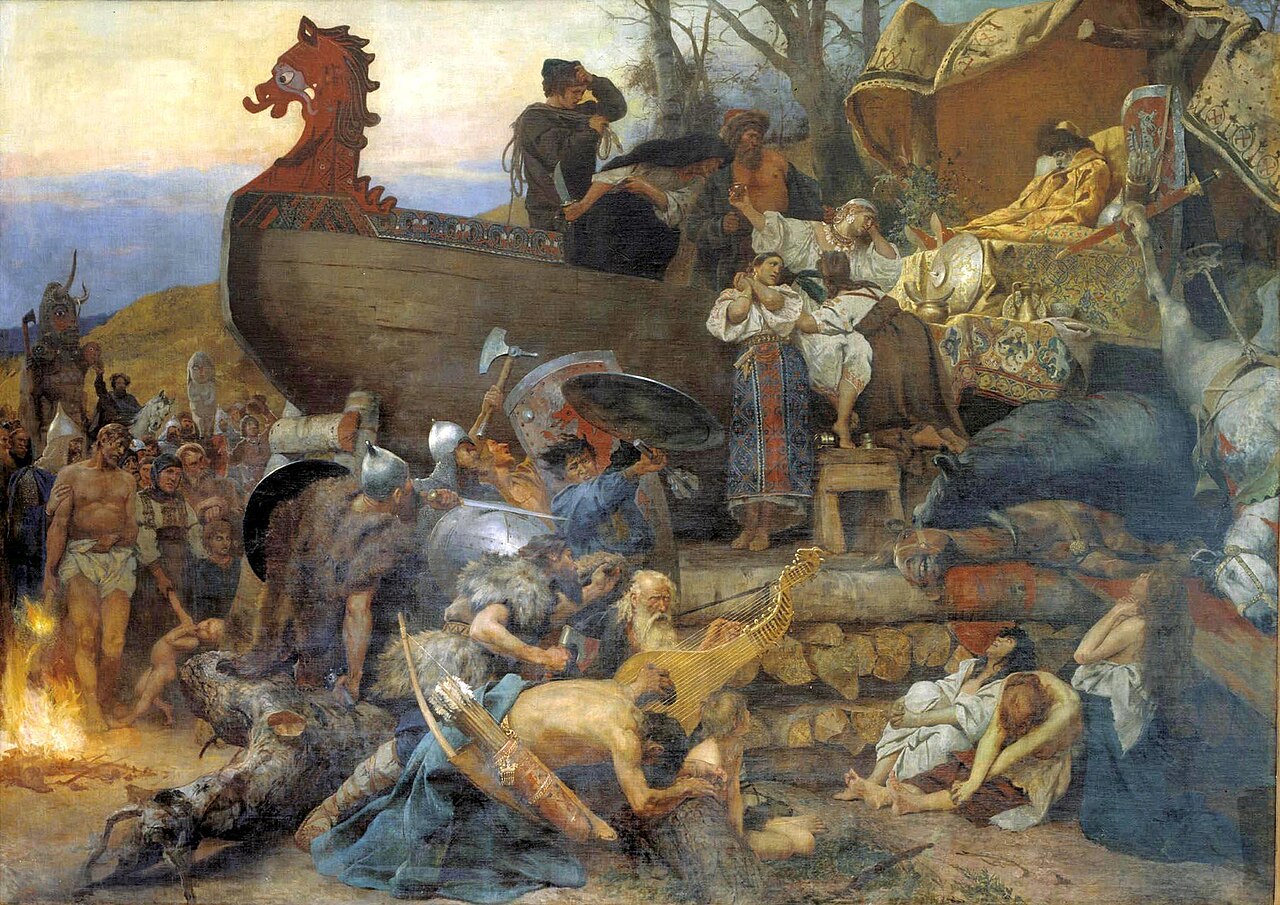
Burial of a Varangian Chieftain, Henryk Siemiradzki, 1883
Siemiradzki's image of a viking funeral is also inspired by ibn Fadlan's account

Last time, I wrote about the characteristics a Viking campaign's setting should have, now I'll spend some time talking about how I plan to evoke the period mechanically and handle some important Viking activities in the game.

I've decided to use GLOG as base system for the campaign, mostly because of the huge amount of class options written for it and how easy it is to hack in good bits from other old school games. Particularly, I'll be taking a lot of inspiration from The Nightmares Underneath  and also some of the rules from Lukomorye.


Classes and Leveling up
In Viking age Scandinavia, the intuitions which controlled power in the medieval period (e.g the Church) were yet to be fully adopted and local institutions (such as the numerous local legal assemblies called 'Things') had less power than the structures which would come later. Power was held more by persons than by structures.

 So, instead of being the member of a class or calling to gain new abilities, you must find a person to instruct you in that class who is a higher level than you. To get fighter 3, you need a mentor who's Fighter 3 already and he can't teach you Fighter 4. Leveling up will probably take a week to a month of training, double that if you're picking up a new class. At home, there will probably be only 3-4 classes available. To find more, you'll need to venture out and interact with the other peoples of the world and find mentors among them. Some classes may be unique, mastered by 1 individual who will not be interested in sharing their knowledge without good reason. Also, having to spend a long time abroad may make achieving mastery of your class difficult. You may find yourself in a place where you are the only Fighter may have to adopt a local tradition if you want to benefit from a level up.

Gaining Experience
Gold for XP makes a lot of sense to use for a Viking campaign, but I think more could be done. For instance, it might be best to give xp when goods are exchanged for precious metals so furs and other valuables can be used to gain levels. Also, I may consider implementing non-combat xp awards so journeys which are commercial failures still have some value to players.

Death, Dismemberment, Retirement 
I'd like characters to retire semi-regularly so that players could try playing the new kinds of people and the new classes they'd discovered on their adventures. Vanilla GLOG usually maims characters instead of killing them, I might move the needle closer to kill or make getting dismembered more debilitating to encourage retirement. Also there should probably be a benefit for retiring characters. Maybe they'll be allowed to level up while retired, manage domains, and return to the game at a later date.

Technology
Most medieval fantasy rpgs assume a decidedly late medieval or early modern level of technology. There's usually a lot of pole arms, sometimes basic gunpowder weaponry, and abundant plate armor. I'd like to keep things  earl medieval, especially in the arms and armor department. 

These will probably be the only weapons: Sling, bow, knife, long knife (basically a short sword), axe, spear, battle axe, sword (a rare status symbol)

In terms of armor, the shield will be the most important piece. It should be subject to breaking frequently too. Body armor, such as the classic leather and chain varieties, should be pretty rare. Most armor will be assembled piecemeal (I'll probably be drawing heavily from Lukomorye's body armor and accessories system). 

Here's some other notes: there is no glass, potions come in waterskins or ceramic jars. There are no lanterns. Your torch creates lots of dirty smoke, candles don't produce much light either. Everything and everyone is generally covered in mud and soot. People live in houses made of mud and straw. In Scandinavia they mixed it up and put the mud on the roof instead to invent the glorious turf roofed house.

Exploration
Wilderness exploration has always been difficult to do well in D&D. The space it takes place in is too abstract, too large, for the usual techniques which make dungeon level exploration work to be successful. There can still be wilderness dungeons which exist on a slightly larger scale than is typical, but trekking through the wilderness should be done differently. I may just rule that the party will need a guide, or perhaps learn the route from another source, to start out on a journey into the mostly unexplored wilderness with random encounters along the way. Still, I'd like the player's to have some freedom in deciding where to go, some chance to stumble across unexpected locations in the wild. 

Exploration by sea will also have to be accounted for. Sailing isn't very interesting by itself, but there should be encounters at sea. I think I'll need pretty robust rules for ships getting damaged and repaired, fighting on deck, and also rules for calculating how much cargo a ship can hold.


Raids and Skirmishes
Raids involve a lot of moving parts. A team of raiders, a settlement with a bunch of buildings, hundreds of inhabitants, a defense force quickly mobilizing, the actually party itself, and a whole lot of chaos. Big skirmishes with 20-50 on each side and pitched battles are not represented well at the scale of D&D combat. Good raiders will avoid this kind of battle, but they still may happen regardless. The whole raid should probably run more like a dungeon, at the scale of 10 minute turns, with the actions of raiders away from the party abstracted to a single dice roll (i.e do they succeed in doing X in the turn) 

A raid may last for hours and see the players going after large objectives, temples, places where goods are stored/produced, treasuries, the homes of the rich, while their team tries to scatter the defending forces and extract valuables from the populace. 

The party may also end up occupying settlements for days, maybe months to continue finding loot or in an attempt to establish the settlement as a beachhead for further raiding and eventual conquest. This will eventually lead to a pitched battle with a larger force of defenders brought in from the surrounding region, the only question is how long it will take for such a force to be assembled. 

In any case, exploration and raiding should make use of a morale system, I'll be using Luke Gearing's. I also need to figure out how xp and gold are distributed among all the members of the raiding party. 

Tribes 
The last time I visited the Meager Country, the different peoples of the Meager Country gained different bonuses from their spirit guardians while the Besharans were divided by religious practice and belief. I'm considering blending these systems together for this campaign.

 For belonging to a certain ethnocultural group you'd get a small bonus but have to abide by certain group practices. For the example, you couldn't continue to be one of the Untamo after violating the sanctity of the sauna, the heart of spiritual life for this particular tribe. Players would usually have no qualms about killing a person in a sauna. They're naked and not on guard, it's a perfect plan. If the violation of a taboo is involved though, and the loss of a mechanical advantage, it may give the players pause. Of course, if we've established that violating the sauna is a grave crime they may exhibit the same pause, but I think using mechanics to underline the importance of these taboos and habits can help get players into the setting. 

Economy
I don't have enough time to do extensive research into the exact value of silver in the Viking age economy and compile accurate price lists. However, I think I'll be able to get away with stealing the great item lists from the Lukomroye player's guide. I'll probably be awarding precious metal by
 weight rather than in coin values at first and use some of the information from Nightmares Underneath to figure the exact value of a gram of silver. I'll also probably be using the inflation rules from Nightmares and the item availability ones from Lukomorye. I may also increase the price of arms and armor by a few fold.  

Institutions 
Institutions are a great place for players to invest money from Nightmares Underneath and would make perfect sense for a Viking age inspired campaign. Though, I will probably have to write more setting appropriate institution types. I think the institutions can also be easily folded into domain play. Here are some more appropriate Viking age institutions. 

Temples, Trade routes (mostly building trading posts), Fortifications (for protecting the trade routes and securing domains), Blacksmiths (for arming large contingents of soldiers), Great halls (for receiving guests and drawing fame), Shipbuilders.

There should probably other institutions which you can learn about abroad (i.e the capital C Church)

Downtime 
I'd like there to be a lot of downtime between expeditions. Winter is long, the season for exploration is short. What happens during downtime will probably be most determined by whether the players are more focused on the world abroad or that at home. There will be feasts and festivals to attend, assemblies and trials to see, and perhaps battles between factions to win or lose. Ships will also have to be resupplied, information about newly discovered routes will need to be acquired, fresh rowers and raiders will need to be recruited.

So that's the rough outline for my campaign, at least mechanically. I'd love to get some other perspectives on what I've presented here, especially the part on tribes.

This post is dedicated to Lawspeaker Torgny, who brought peace with his great harangue 

Sunday, March 31, 2019

An Introduction to the Viking Age

Illustration by Angus McBride of the death of Olaf Tryggvason
 from "The Vikings" written by Ian Heath 


Luke Gearing has been blogging a little about a Viking campaign and it's got me excited. As readers of this blog may guess, I may have a more than passing interest in Scandinavian culture and the Viking Age. Though Luke is right that going a-viking can provide a strong start to a campaign, I've been constantly disappointed by how the Viking age Norse and their world is imagined in rpgs and in broader pop culture. There's a pervasive obsession with the Norse as a warrior culture, some subconscious idea that the raiding which defined the Viking age was the expression of a people whose primary trait was obsession with the glory of battle.

 At worst, this misconception gives us the Norsca of Warhammer, who are just barbarians who want to tear down civilization and spill blood. At best your Norse-themed fantasy civilizations emulate the aesthetics of Viking age Norse culture without replicating any of the historical context. The Banner Saga series of games is a good example of this trend. What you end up with is a series of symbols, runes, round shields, longboats, which are supposed to stand in for some eternal Viking-ness but only symbolize a wholly modern conception of who the Norse were. Granted, vikings are a popular theme in the tabletop space and there are several games which try to offer a more authentic picture of the Norse. Fate of the Norns and the fairly new Sagas of Midgard all try to offer an authentic Norse-ness in one way or another. However, I am still unsatisfied by these projects. These games want to explore Norse myth, more so than Norse history and in doing so sometimes perpetuate the same misconceptions which give us the Norsca.

While I would love to go into depth about the falseness of the warrior culture myth and the mess of misconceptions which accompany it, I do not think I could muster any argument or evidence able to completely overcome this great specter which haunts Scandinavian/Old Norse/Nordic studies. There is no way I can scoop all the romantic paintings of Thor with his winged helmet and all the modern pictures of Odin with a sleeve of runic tattoos out of peoples' heads with a few idle words. However, I can offer a different vision. I can show you what I find so fascinating, so enthralling about the Viking age. Hopefully, I can convince you that a game inspired by the historical context of the Viking age should be about a lot more than just raiding.

Introduction to the Viking Age

The Viking age (roughly 793-1066 AD) was a time of incredible change in Scandinavia and over its' course all of Norse society would be altered. The Viking age saw the first urban centers emerge where previously all of the region had been rural. It saw the rise of the first kingdoms in Scandinavia, the centralization of power to a degree unheard of before. It saw the creation of great trade routes which connected the White sea to all of Europe, the Eurasian steppe, and to the Islamic world. It saw the birth of new colonies and domains far from where any Scandinavian had previously traveled. And, of course, it saw the introduction and victory of Christianity over paganism which rearranged much of Norse daily life.

But trends don't tell us the whole story, they give us the impression that change occurred at a measured pace instead of in fits and starts. There were, for example, several waves of urbanization which saw trading posts built and abandoned before new ones sprang up. Similarly, the conversion to Christianity advanced piecemeal, with champions of the faith, like Olaf Tryggvason, coming to power and later being deposed.

Trends also don't tell us why things happened. The changes which occurred in Scandinavia were driven by a web of circumstances, actions, and reactions. The success of the Carolingian kingdoms probably inspired Norse rulers to construct the earliest trading towns based on the model of those across the Baltic sea. The settlement of Iceland may have been driven by the higher tax burdens imposed by the first king of Norway, Harald Fairhair, which encouraged many to leave the country. There are many factors which could have lead to the increased range and frequency of raids and increased exploration which defined the Viking age. A warmer climate, a growing population leading to a dwindling amount of land allotted to each son, advances in sailing technology, the previously mentioned political changes, all probably encouraged Scandinavians to reach out to the broader world.

Scandinavians found success as conquers mostly in the same places where their raids were successful. The Baltic sea, the British isles, Eastern Europe, the west coast of Europe were all subject to raids and to a lesser extent the creation of Norse kingdoms and settlements. These Scandinavian founded dynasties would eventually be absorbed by the groups they dominated and frequently came into conflict with each other. The nobility of the Rus states, in what is now Russia and the Ukraine, were Scandinavian in origin but began to take Slavic names as time went on. The Normans, also originally Norse, spoke French by the 11th century and clashed with the originally Scandinavian Saxons for control of England. Though raids are certainly dramatic, most of Scandinavia's connections to the broader world were formed by trade not by violence. Saami and Finnic populations provided many of the furs and walrus ivory which formed the heart of Viking age trade routes. Of course, the Arabs, Byzantines, Irish, Carolingians, and English also played a vital role by providing the demand for goods brought by Norse ships. Both Byzantium and the Abbasid Caliphate were victim to a small number of raids, but all were largely unsuccessful. The only way for the Norse to access the greatest riches of the world was through trade, in fur, in amber, in slaves. These trade routes brought massive amounts of silver and lesser quantities of gold to Eastern Europe and Scandinavia, allowing rulers there to line their pockets and better cement their power. The Byzantines also made use of Scandinavians in a military capacity as guards to the Emperor, though the members of this Varangian guard would eventually stop being sourced from Scandinavia.

The raiding, conquest, exploration, trade, and settlement which defined the Viking age were both the cause of and effect of a web of changing circumstances which originated in Scandinavia and were brought to it, which transformed the homeland of the Norse and the world abroad. Though the Norse did often interact with the world in violent ways, it is critical to note that the majority of the cultural and economic relationships they formed were not. It was age when people and places which had never been connected before were drawn into lasting patterns of encounter and exchange. At the forefront of these budding relationships were people willing to risk life and limb, leave the safety or danger of home behind, to pursue gain in the broader world. It was not just the fiercest warriors who succeeded in the Viking age, but those who had the skills to turn a boat full of furs secured from the Finns in Vipuri, into a boat full of silver in the city of Itil, and finally into an army in Denmark able to take power. But not all needed a throne to be happy. Those who settled down in Iceland, Greenland, were just motivated to find a new home, for some the profit motive must have been a draw, and perhaps the call of a yet unknown world was too hard for some to resist.

But the Viking age would not last forever. There were only so many kingdoms to build, so many beachheads to take, so many rivers that lead to the sea. Some would only realize this when it was too late, once they'd already run aground on great sandbars their boats could not overtake. In 913, stranded in a city in Azerbaijan, a beardless youth from somewhere up north took his own life rather than be captured by the forces of the governor Marzuban ibn Muhammad. The party that the nameless child was part of had occupied the city for months, intending to hold it indefinitely. Things were changing in Scandinavia too. Traditionally, power was held together by familial relationships and promises sworn between charismatic rulers and their supporters, but these foundations of blood and bone were to be replaced by ones of brick and parchment. New institutions were being born in Scandinavia, ones which were much more immune to change. Castles and Churches built side by side would replace the old halls and scared groves. In 1066, in an English field, Harald Hardrada was struck in the throat by an arrow. Harald had adventured across the world for 15 years, amassed great wealth fighting wars for Yaroslav the Wise and Byzantine emperors, before returning to Scandinavia to seek the throne of Norway, Denmark, England. Could he see that the strength of his right hand would not be enough this time? Were he and that anonymous boy aware that an entire age was ending with and around them? 

 Change progresses like the tide, going in and out, but slowly reshaping the coastline. Earth is undermined, then falls away. Grain by grain the sand is replaced. In the long view, from up high, it is clear that there is only a slim chance things could turn out any other way, but on the ground, when it seems each transforming wave could be the last, the outcome is impossible to tell. I think this is how it was for the vikings, the explorers, the merchants. Though many would go unremembered, though many would be dashed against the rocks, they could see the world had given them a chance to reach out and hold their own destiny. The pages of history were yet blank, the mortar was still wet on the stones. This is why I love the Viking age. There was still time to write your name or carve it on the walls of the Hagia Sophia. There were still new lands to see full of new people to meet, new faces to kiss, new fruits to eat which are gathered in no other orchard, and new sunrises to gaze upon.

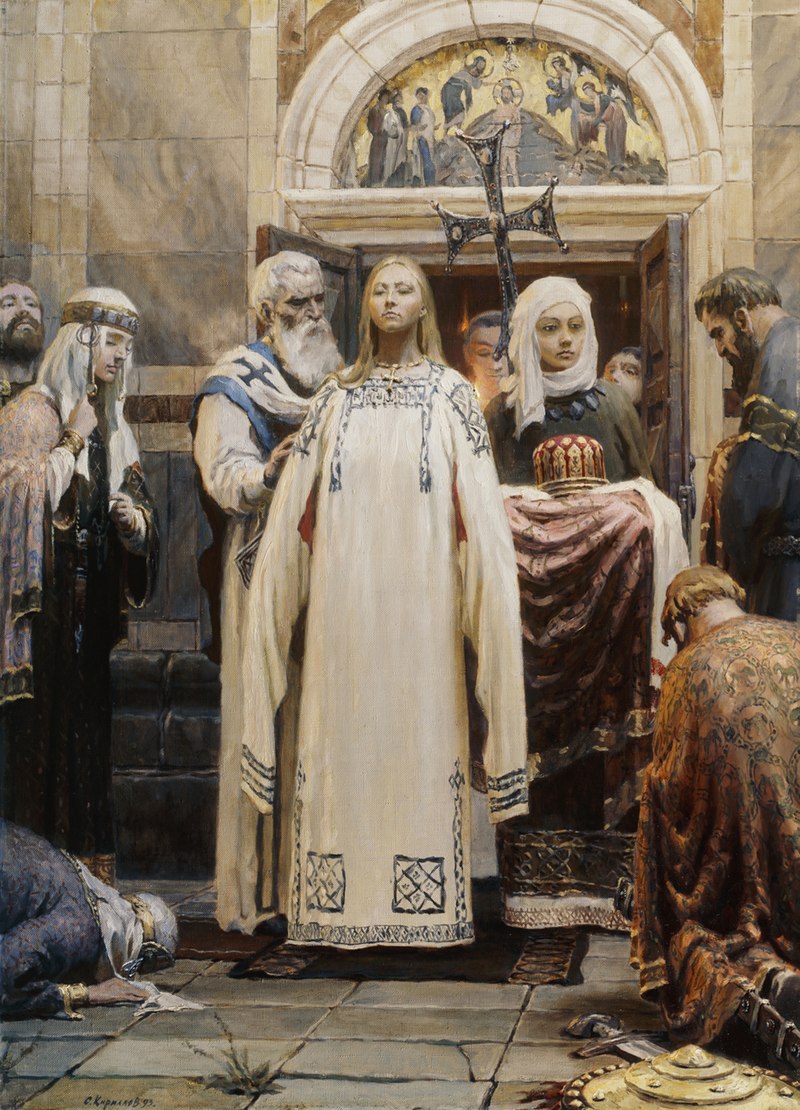
Baptism of St. Princess Olga, Sergei Kirillov, 1993

The Viking Campaign


As we have seen, the Viking age was about a lot more than raiding. If you want to run a proper viking campaign then what matters is not that you preserve a Viking age Scandinavian aesthetic, but play in a world where the historical context of the Viking age is preserved. I wouldn't recommend reproducing the exact circumstances of any decade or century in the Viking age, but rather trying to capture the major and most gamable aspects of the period as a whole. 

The homeland of the player characters should be on the edge of domains which are not immune from raiding or conquest but have superior technology, higher populations, and more centralized authorities. Nearer to the homeland, should be populations able to provide valuable trade commodities (fur, ivory, amber, ect). Forming lasting relationships with these populations can provide steady streams of income, but they'll probably need the party to help them fight their local rivals or send them on a quest. 

Beyond this, the world should be mysterious and mostly unknown. The game's mercantile element should come from having to find the wealthy empires who'll provide the most silver for the party's goods. There will be many trade routes, some dangerous, some full of middlemen looking for tariffs and duties. The elites of the world's empires may also have an interest in the party. Having a group of foreigners with a slightly different attitude towards violence on hand is always useful for those with power. 

 There should also be a kind of adventurer diaspora forming. The party may have rivals who set up kingdoms and settlements close to theirs, compete for access to the same trade routes. The trajectory of the viking game should see the party doing small scale raids and exploratory missions which lead to greater opportunities for profit and eventually transition to more domain focused play, abroad or back in the homeland, in classic old school fashion.    

For players, a viking campaign should be an opportunity to play as a character who is half a rogue trader from Warhammer 40k, a risk taker looking for profit in the unknown, and half Conan the Barbarian, an outsider come to see and judge the heights of civilization.

For GMs, a viking campaign is an opportunity to describe an orange to a character who has never seen one before, to test their player's skills in areas beyond dungeon level problem solving, and to design a political sandbox for players to mess with.

So that's my introduction to the Viking age. I will stress that it is just an introduction. There's a lot more to say about Viking age Scandinavia and its context than what I have presented here is not uncolored by my own reading of history. If you want to learn more about the history of the Viking age, there are many books which serve as deeper introduction to the material than what I provide here. However, I prefer reading the original source material. 'The Viking Age: A Reader' provides a wide variety of sources from many perspectives. I'm a big fan of 'Ibn Fadlan and the Land of Darkness' personally. The doctoral thesis: 'The Rus in Arabic Sources' is also a big influence on the way I see the Viking age. If you want a book with a more rpg focused book, let me recommend 'GURPS Vikings', which does a good job of dispelling common misconceptions about the Viking age.

Thank you for reading this whole thing, hopefully in a few weeks I'll have more details about my own viking campaign  (which will basically be Meager Country v2) ready to show you all.

Hour of the Wolf, Minna Sundberg, 2019

This post is dedicated to that Arch-Lair, that Deceiver, that Great Poet and Preserver: 
Snorri Sturluson

Sunday, March 3, 2019

Welcome to the Ashlands


I took a little break from the Meager Country to write a one page setting, a science-fantasy wasteland ravaged by a war that can't be remembered. Old weapons and old mysteries abound, check it out!


Various Ashlands Visual Inspirations:

Image result for ww1 trenches forests painting

Sanctuary Wood, Cecil Constant Philip Lawson, 1916

Related image
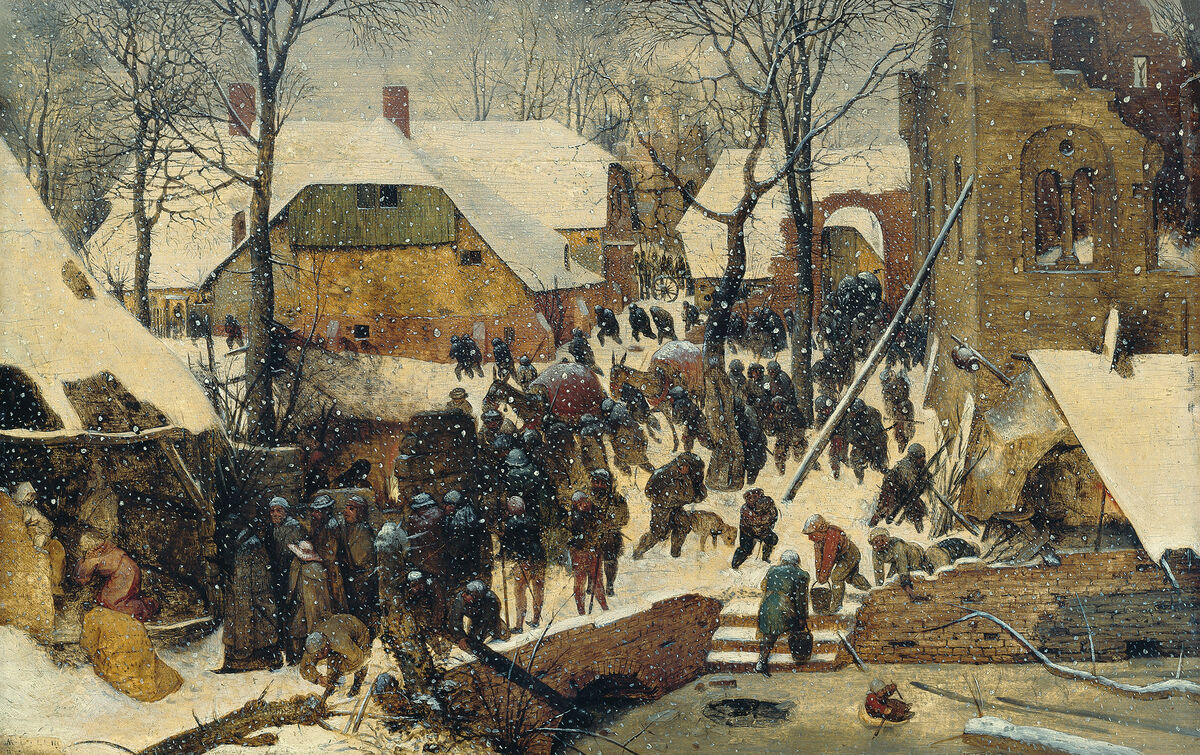
The Adoration of the Magi in the Snow, Pieter Bruegel the Elder, 1563

Entrance to the First Temple of Karnak; a square court, partly ruined, surrounded by double columns of the closed lotus form, covered with paintings and hieroglyphics, near the foreground r an Arab seated on the sand heaped up round the bases of the pillars, one of which has half fallen, another court visible through doorway beyond Watercolour and bodycolour; on buff paper
Untitled (Entrance to the First Temple of Karnak), William James Müller, 1812-1845 

The Forum, Rome, David Roberts, 1835

Moaning Wall, Piotr Jabłoński, 2017

The Menin Road (1919) by Paul Nash, amongst the First World War artists that will be subject of talk in Diss. Picture: Diss Corn Hall
The Menin Road, Paul Nash 1919

This post is dedicated to T.S. Eliot

Saturday, February 9, 2019

Wrestling Rules and Wrestling Tournaments


Whenever people ask me how present authentic feeling steppe cultures in D&D settings I tell them they need 2 things: kumis and wrestling. While kumis is basically a universal across the Eurasian steppe (the Ghuzz Turks of Ibn Fadlan's time certainly drank it), wrestling is more of a Mongolian pastime. From what I've read, there is no evidence that there was any wrestling going on along the banks of the 10th century Volga river, but that should not be a barrier to putting Mongolian-style wrestling in the Meager Country or in any setting where nomads abound.

I've had great success running wrestling tournaments with the rules below. They're adapted (mostly verbatim) for 5e from Joseph Manola's Mongolian wrestling rules (read the whole post if you want to learn more about Mongolian wrestling). It's a great deal more interesting than resolving wrestling matches with contested athletics rolls and provides a fun minigame, a break from the drudgery of combat and negotiations.

Image result for mongolian wrestling art
A painting of the eriin gurvan naadam

Wrestling Rules

To resolve a wrestling bout, each wrestler rolls 1d6 and adds their Wrestling Rating.

-Your basic Wrestling Rating is equal to the sum of your Strength modifier, your Dexterity modifier, and your proficiency bonus if you're trained in athletics and/or acrobatics. 

-Trained wrestlers add an extra +1 to their Wrestling Rating. Being an expert wrestler increases this bonus to +2. Most natives of the steppe are trained wrestlers. 

-If you've studied the technique of your opponent, you may add your Wisdom modifier to your Wrestling Rating. To study an opponent's technique, you must wrestle with them once or watch them compete in two bouts. 

-If you are substantially larger and heavier than your opponent, add +1 to your Wrestling Rating.

-You are expected to have a Supporter (called a zasuul) to yell advice at you, offer encouragement, dispense all-purpose smack talk for the audience. If your Supporter has a positive Charisma or Wisdom modifier, you may add an extra +1 to your Wrestling Rating. If your Supporter is an expert wrestler, you may add an extra +1 to your Wrestling Rating. 

 If one wrestler beats the other's score by 3 or more, then they score a quick victory and their opponent goes down within minutes. 

If the wrestlers' scores differ by less than 3, the match goes long. When the match goes long, each wrestler rolls 1d6 again and adds a modified Wrestling Rating.

-Unless their scores are tied, the wrestler who scored the lowest in the first roll has their Wrestling Rating reduced by 1, to represent their dented confidence. 

-Each wrestler adds their Constitution modifier to their Wrestling Rating, to represent the importance of stamina in the long bout

In the long bout, the highest score wins and a tie indicates a draw, probably because someone bungled a throw and ended up hitting the ground at the same time as their opponent.

Rule Variant: The long, long bout (for those who want more attrition in their wrestling)
In the long bout, you must beat your opponent's score by 3 or more to win. Ties do not result in draws.
If nobody wins the first long bout, repeat the process until one wrestler is victorious.

-As per the first bout, unless the their scores are tied, the wrestler with the lowest score has their Wrestling Rating reduced by 1. This effect stacks

-In the long bout, draws only occur if the competing wrestlers have the same Wrestling Rating and their scores tie.

Tournament Rule Variants
From my limited research, I've gleaned that Mongolian wrestling matches are usually best of 1 affairs, but I find that it's more interesting for the whole party if they all can participate in winning the tournament. 

Teams: Wrestlers do not compete individually, but as part of teams, who take turns in best of 1 matches. The wrestlers who aren't in the match can watch the bouts of their competition to study their technique. If you decide to be one of your team's supporters, you cannot participate as a wrestler. (We may imagine that because the party is made of foreigners they're allowed to compete in a team as a crutch)

Best of 3: Matches consist of 3 bouts instead of 1. (This gives wise wrestler a chance to study their opponent's technique)

But why would you want to compete in a wrestling tournament? Here are some possibilities:

1. Loot. Some local khagan or war leader is offering the spoils of war, perhaps an item the party needs, as the grand prize in a wrestling tournament

2. Respect. The party may have the khagan on their side but they'll never win the trust of the whole community unless they compete in the upcoming wrestling tournament

3. Assassination. A notable person, a thorn in the party's side, is competing in a wrestling tournament. It would be so easy to snap their neck if you can just get a good pin.

Wrestling Titles
You should make sure there are some good titles up for grabs in your tournament. Roll 2d10, one for an adjective and one for a noun to generate a simple title. Let your players write it on their character sheet if they win it for themselves (maybe the opponent they got it from will come to win it back later).

Adjective:
1. Wide
2. Weighty
3. Brazen
4. Mighty
5. Stout
6. Steady
7. Hardy
8. Unstoppable
9. Firm
10. Raging

Noun:
1. Elephant
2. Falcon
3. Lion
4. Bear
5. Horse
6. Champion
7. Hero
8. Bull
9. Wall
10. Yak

Further reading: Here's a clip from the reality tv show Last Man Standing, it shows what a Mongolian wrestling tournament looks like and what a bout between a trained wrestler and a novice looks like.

This post is dedicated to Borte, first empress of the world

Thursday, February 7, 2019

Meager Country Manifesto

Image result for ibn fadlan
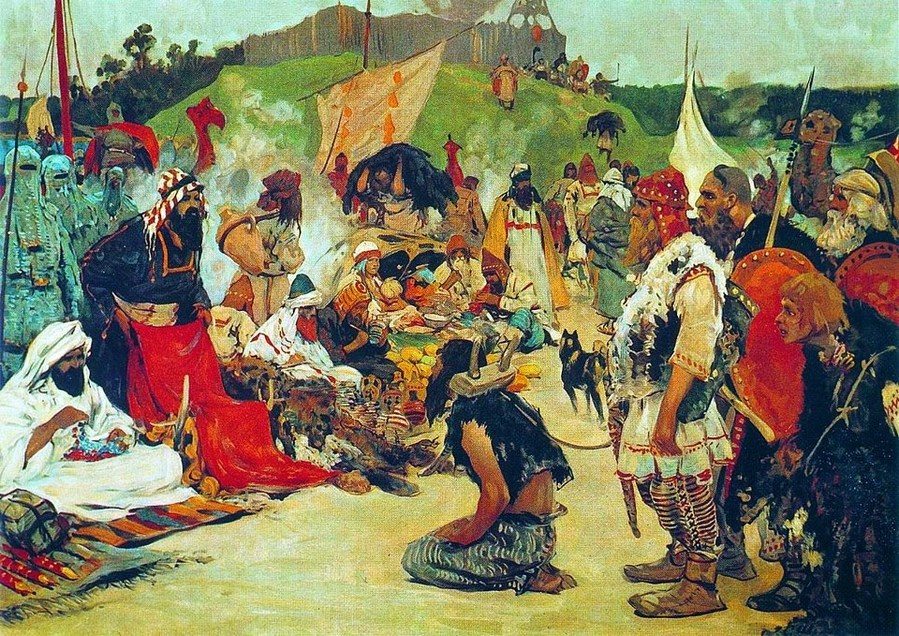
Trade in the East Slavic Camp by Sergei Ivanov, 1913
An image that is always close in my mind when I imagine the Meager Country

As I prepare to run another Meager Country game, I’ve been refamiliarizing myself with the sources that originally inspired the setting. In particular, Ibn Fadlan’s account of his embassy to the Bulhgars as well as the other sources contained in the book “Ibn Fadlan and the Land of Darkness.” Over the course of this exercise, I’ve been reminded of all the things the Meager Country is supposed to capture and all the different directions I could take it. To focus myself, I have written this: My Meager Country Manifesto.

Really, the goal of the Meager Country is to inspire in players a similar sense of danger, strangeness, disgust, fascination, and fear that Ibn Fadlan experienced while meeting the Turks, Bulhgars, Khazars, and especially the Rus. This mix of sensations and the desire to question that goes along with it, I feel, can form the compelling heart of a D&D game.

Of course, Ibn Fadlan is a very unique voice among the small body of documents we have which record the time period I’m interested in. Fadlan’s account is incredibly early (from 922) and he sees things which no other source mentions, like the now classic burning of a Rus leader with his ship.
When other Arabs find themselves in eastern Europe later, such as Abu Hamid al-Andulust al-Gharnati, who started his journey in 1117, almost 200 years after Fadlan, they find a very different world and had very different reactions to it.

Eastern Europe is like a second home to Abu Hamid. There are Muslims and Christians everywhere, the leaders want to learn from Abu Hamid and listen to his shitty poetry. There is nothing to provoke in him that complicated knot of reactions which Ibn Fadlan feels.

In short, I am interested in a time in history that’s as thin as a knife’s edge. The 10th, or maybe even 9th, century which contained a northern world where Islam and Christianity were just beginning to penetrate but had not had any major victories. It was a time when mountains of silver were flowing from Samanid mines onto the Volga to the city of Itil, to the Don river and up, up to Kiev, up to lake Lagoda, up to Birka. Trade was drawing the world together. Alliances between Slavs and Turks and Rus and Magyars with Rome or Constantinople or Baghdad were being formed and faith would cement those fledgling bonds. This is where we find Ahmad Ibn Fadlan, called by the Caliph to bring Islam and 4000 dirhams to Bulgaria.

But the things which moved Ibn Fadlan by their strangeness will not do the same in a modern D&D player. Pluck any person from 10th century Baghdad and show them a Rus merchant and they’ll be seeing something, someone, totally new and unfamiliar. Do the same with a modern RPG player and they’ll just say: “So is this like Vikings or what?”

So Meager Country v2 must be both more historically grounded and more divorced from historical reality. Its world must emulate the political and economic state of the 10th century Arab world, the state which made the journey of Ibn Fadlan to the Bulghars possible, but also be full of new wonders, aja’ib in Arabic, which arouse the same reactions which Ibn Fadlan felt but in the mind of a modern observer.

It’s nice to make nice aesthetic plans but putting them into action, turning them into content is another thing entirely. So what will I do? What will give Meager Country v2 the qualities described above?

1.       Incorporate more Arab beliefs about the far north.
One of the most enduring beliefs about the north in the Arab world was that it was home to Alexander’s Wall, a massive iron gate constructed by Alexander the Great to prevent two races of giants, Gog and Magog, from destroying the world. Such a thing could easily be a ruin left by some fallen civilization, in true OSR style, but it could also be run as a legendary location whose existence is up for debate. I think many of the more eccentric ideas about the north which make their way into Arab sources could be turned into a rumor table and add a layer of doubt to the game.

2.       Add odder folk and folk ways.
I like all the weird kinds of people I wrote for the Meager Country, however I don’t think I emphasized their odd customs enough. I want to get to a point where there’s a sense of culture shock, though I think that might an impossible goal. I should focus more on the strangeness of the different peoples. There should be more odd food, weird rituals players are asked to partake in, more opportunities for faux pas, and I should put players more often in the role of cultural teachers. The Silent Trade will have to mentioned more.

3.       Make travel more dangerous and make stumbling on points of interest more likely.
Though some parts of travel should feel vast and trackless, I want some portions of the game to feature difficult journeys, maybe using wilderness dungeons, or by making use of a deadlier random encounter table. I’d also like to have a high density of interesting locations, maybe by using a few wilderness location tables or just by writing a dense hex map. I could also use some rules for fording rivers.

4.       Focus more on getting from the Empire to the Meager Country
It took Ibn Fadlan a while to just to get to the lands of the Samanids and he visited many cities along the way, he even had to lay low at a little bit. It could be interesting to experiment with starting the campaign as a game about getting the right letters securing passage and greasing the right palms to contrast with the hexcrawling that follows.

5.       Modify what is found in historical sources to create new and evocative content
Just taking things from history is not enough, these ideas must be modified, amended with the fantastic, to strike the tone I want the Meager Country to have. I think that even the fantastic and mythological elements found originally in history should be altered so that some part of them is still unexpected, still unique to the Meager Country.

Now I have a much better idea of what Meager Country v2 should feel like as well as how it will play. It should be a much more player driven game, where there’s less a mission from an imperial authority but just a direction. I think I’ve already been applying some of the above principles, especially #5, but having them written down and codified will help me keep focused on what I want the Meager Country to be as I go forward.

As always, thank you for reading the most idle, content deprived of my musings.

This post is dedicated to Thomas Noonan, who counted coins

Friday, January 25, 2019

Farewell to the River: Meager Country Post Mortem

The first thing my players read about the Meager Country campaign was this:

"Her eminent majesty, the Sultan of the Bronze City has little interest in this cold and poor land. The people it houses are many and barbarous, valuable only so long as they respect the empire and as suppliers of fine furs, strong slaves, and amber. However, Her greatness has made certain investments up the river. To the people of Orusk she has given a small fortune of silver. This debt she needs reclaimed and given to the Koto Kete so that they may build a fortress to protect themselves from the vicious Kazan, whose budding domain will surely threaten the empire if none can stand against them. And to you, a ragtag group of scholars, civil servants, and mercenaries the Sultan has promised a single favor, if only you do her bidding. Sell your silk robes and put on your fur coat, it’s time to head up the river, to the Meager Country."


Just last week we finished up the campaign. We started playing last June and were able to meet almost every week. Everything went well, the party delivered the 5000 gp, taken from tombs and from lakebeds and from the spoils of war bands and from the coffers of cannibal priests, into the wide lap of Khan Sarnai. The Sultan had given them 5 Besharan months to complete their mission and return to the palace, which boiled down to 105 days once the time it would take to cross and recross the Sea of Pearls was accounted for. They managed to do it in 102, a fine performance if you ask me. We ended the campaign with a quick epilogue which went over what each of the characters did with the favor offered to them by the Sultan. One had a more democratic university constructed which his adopted daughter, formerly a slave in the Meager Country, attended when she was of age. One won back his family's misspent fortune. One requested a bow made by finest Wizard-Artificers and became a mercenary. The last found her way back to the Meager Country on a new expedition to discover the origin of Glass Women.

I'm really happy with the way the campaign turned out overall. I got to test out a bunch of new mechanics and character options. I got to explore the Meager Country for the first time, which lead to the creation of this blog. We got to end the campaign with a strong conclusion, instead of letting it sputter into extinction. And all along the way there were lots of great moments and encounters which I think my players will remember for a long time. But I've also learned a lot from this campaign and realized I need to improve in many different areas. So, gentle reader, let's dissect the Meager Country.

The New Rules and Character Options

I added a lot of rules to 5e with the goal of achieving a more OSR/DIY style of play. I used a wound system with a drop dice table and an encumbrance system cribbed from the GLOG. I also put more restrictions on spell casting with my religion system, which sees most of the classes required to perform rituals to maintain their supernatural powers. I also added extra restrictions to wizards (though nobody played one). I sent around a survey to my players to ask them how they felt these rules impacted the game and we seemed to be in agreement: all these rules didn't feel like they made a huge impact on the game. People felt like most wounds could be ignored (they only needed to rest to get rid of wounds once), and completing rituals wasn't a great hindrance. I think this was in part due to the style of the campaign, it became more about negotiating and role playing rather than combat. The party's material resources were never put under the kind of long term pressure which is required for people to really notice the effects of wounds piling up and the time needed to perform rituals drying up. It might have been a better idea just to use the gritty healing rules provided in 5e so that the resources the party had felt more valuable and had to be managed over a greater length of time.

We also had new people to play as and new backgrounds. For the new people, I also took a more DIY approach, no stat bonuses and no dark vision. Not all of them got tested, but I think Bronze Folk and the Tamani definitely need something more to make them feel more unique and the Clay People's whole ivory eating thing never seemed like it got enough use and should be replaced. I'm proud of the Glass Women though. My only complaint is that they might be too powerful and dwarf the other peoples in sheer coolness. Generally, I think all the people could be better focused around 1 or 2 major bonuses. 

As for the backgrounds, only one was used (the imperial bureaucrat) and I think I bungled the job pretty badly. I neglected to fill out the bond, flaw, ideal tables and now that I've played more 5e myself I understand their utility a lot more. 

Things I learned

-You don't need a lot to have fun. Some of the most engaging sessions we played were just based on rough sketches of wilderness environments the players were charged with exploring. 

-Even failure can be engaging. The party attempted to resurrect a dead fire goddess and failed. I thought it would be really demoralizing but many of the players looked back on the moment fondly. 

-Having a campaign centered on a single mission is efficient. It provides a reason for all the characters to be working together and sets reasonable expectations for what the game will be about and when it will end. 

-Burnout is real. It was incredibly hard to prep a session from almost scratch every week and I felt pressured to produce a lot of unique material for a unique setting. I think this pressure really hurt the campaign and led to many parts of the game feeling a little underdeveloped. 


Things I need to improve on

-I really need to do traveling across the steppe and having encounters there correct. It often felt like we were traveling across just expanses of nothing but grass. In general, travel felt a little too vague, like there wasn't much room for player choice. 

-I need to get better at incorporating NPCs into the game. The party picked up a lot characters who traveled with them but I feel like they didn't have much of an impact on the game. 

-I need to get better at running a political game. There was lots of interacting with different factions but I felt like I could do a lot more to make this an interesting focus of the game. 

Credit Where it's Due

I often wonder about how much material from blogs finds its way into real games. I'd certainly like to hear about it when somebody is so kind as to sue something I've made. So I'd like to take a moment to thank Joseph Manola for all the great stuff he posts on Against the Wicked City. I made great use of his rules for wrestling, improvised a fun encounter involving a Shurale, and ran a really great dungeon inspired by these two posts of his.

What's next for the Meager Country?

I think I'm done with the Meager Country and the Besharan Empire for now, though I'll certainly return to them soon. I'd like to play more, run different systems, get some more breadth in my DMing portfolio. I'm so excited to start new games and continue the long process of getting better at running the game.

When I do come back to the Meager Country it will be quite different, new wallpaper put up for new guests.  For one, I've got to move it beyond just being the bastard child of the Wicked City, Centerra, and Ibn Fadlan's encounter with the Rus.

 Beyond that, I'm not sure what direction I'll go in with the Meager Country. It might not be in 5e anymore, it might take the perspective of the natives of the Meager Country, it might take place in the future where the Besharan faith spread across the world before promptly self destructing. I'll still post about the Meager Country though, as I retcon and renovate, though it will probably be mostly lore and background stuff scattered with the few encounters and dungeons which are fit for being edited and put on here.

I'd just like to say thanks to everybody who has supported this blog or enjoyed what I do here. I look forward to entertaining you more and, hopefully, contributing useful content to your games. 

This post is dedicated to Sallam the Interpreter, who spoke 30 languages 

Friday, January 4, 2019

Light, World, Glory: A Review of the Lukomorye Player's Guide

Time to dip my toes into the huge and murky world of pedantic RPG reviews.

I became aware of Boris Stremlin when I stumbled across his blog, Bardiches and Bathhouses, on Google+ and was shocked by how similar our projects are. We both write for 5th edition, both have OSR/DIY influences, and we both play in settings based off of historical eastern Europe. I feel a bit beaten to the punch honestly. The most recent flowering of Boris' work is the latest draft of the Lukomorye Player's Guide, which he made public on google drive a few months ago. Though some of the art and layout seems yet to be finalized and the text could use another edit for typos, the content of the book is complete. It's a fascinating project with a broad scope, as befits a book which begins with a history of the tabletop RPG starting from traditions of oral storytelling.

Lukomorye is Boris' Russian fantasy setting. It draws on both Russian fairy tales and folklore as well the historical context of 14th century Russia to built an impression of the land of Nor, the setting's Russia analogue, which feels both historical and mythological. The guide does not just introduce new character options for playing world of Lukomorye but recontextualizes these elements and brings wide ranging changes to the rules of 5e. This review will not just evaluate what is in the Lukomorye Player's Guide but also comment on the, perhaps unstated, ethos of the book and finally describe how I would run a game in Lukomorye.

General Remarks: Art and Layout

Though work is still being done to the visual elements of the book, I should still comment on them. Honestly, the layout is the most disappointing aspect of the book. The guide goes with the same presentation as the Wizards of the Coast books, faux parchment paper and all. I'm not very fond of this look and I wish the book did more to differentiate itself from the Wizards' products. It's not all bad though, the first page of the guide is a lovely poem by Pushkin framed by a floral border, almost like something Ivan Bilibin would illustrate. This is the most beautiful page in the book and I wish the others also reflected the aesthetics we associate with Russian fairy tales. On the other hand, the art choice is mostly great. All the best Russian fairy tale illustrators and Romantic painters are here, though sometimes in a grainy resolution. Here, I would only ask that the paintings be better credited and better placed. This issue is more pronounced in the appendixes, where some of the illustrations break the flow of the text too much and Viktor Vastetsov's iconic Knight at the Crossroads is shrunk to the size of a thumb.

This is an image which deserves space!

New Player Options 

Let's get into the content. Lukomorye makes a few changes to the character creation process with the addition of 2 setting specific new skills: consumption (one's ability to eat and drink in excess) and literacy (one's ability to read and write, characters without this skill are illiterate). I love these two skills, I can easily imagine great banquet challenges and I like that being able to read is a specialized skill in itself, as it has been for most of history. Lukomorye also forgoes alignment, replacing it with two competing ideals: Pravda and Krivda, which are roughly equivalent to good and evil. Players get points of Pravda or Krivda for acting in accordance with either ethos, which is a great departure from the mostly static alignment system. Lastly, there are just 2 things which I think are missing from this section. Firstly, I'd like to see a Russian pronunciation guide somewhere in the introduction which covers the words written in the Latin and Cyrillic script. I'd like to know if the two 'o's in 'Lukomorye' make the same sound. Second, I'd like clearer rules for gaining xp. The book suggests that xp will be awarded for gaining information and treasure, a fascinating proposition, but doesn't offer concrete rules to make such awards.

Lukomorye also doesn't have races, backgrounds, or classes. Instead, it calls these categories Kinds, Stations, and Callings and offers both new and altered options in all these areas. First off, the kinds consists of humans, half-human and half spirit changelings, animal shapeshifters, giant Volots, animalistic Psoglavs, and secretive Chudys. There are a lot of options here, with 9 different changeling types and shapeshifter varieties for 9 animal species. Though humans are unchanged from vanilla 5e, the book provides a great selection of nations and ethnicities which gives a sense of diversity and ubiquity which could not be conveyed with a single page of information. The descriptions of all the spirit and shapeshifter varieties is similarly impressive in depth, but the Kind mechanics are not particularly interesting. Changelings get resistance to necrotic damage, a few stat bonuses or proficiencies, and maybe a cantrip or two. There's a few more exciting abilities, like the speaking with water animals which the Half-Vodyanois get. The shapeshifters are better, they gain more powerful animal abilities as they level up but the other Kinds are marked by a similar lack of inspiration. The Chudy, for instance, get a hodgepodge of extra proficiencies and spells, as well as increased darkvision, sunlight sensitivity, and the ability to talk to small animals. Though all of these abilities fit the Chudy's description, which paints them as chthonic but good-natured guardians of knowledge from before the Great Flood devastated the world, none of them really make me want to play as one. Think about the Dwarf and Elf of vanilla 5e. Though each has a mess of different little bonuses, but each also posses a really unique ability, the Dwarf's resistance to all poison and the Elf's Trance, which come to mind instantly when I think about them. The Chudy has no such definitive trait, like starting with knowledge of a great secret or the ability to control subterranean animals. The Psoglavs and Volots fair little better, though the complications arising from the Volot's size and the Psoglav's Rampage are more in the vein of what I'd like to see. I love the concept of all these Kinds and the attention payed to the folklore they're drawn from but I just wish the execution offered more unique mechanics. Personally, I'd like to see the design of races in 5e abandon these boring bonuses entirely and only use unique active or passive abilities. I also think an opportunity to change how humans work was missed. I would have liked to see more encouragement for an all or mostly human party, as the vast number of options here seem to encourage a mostly non-human party in a setting where humans vastly outnumber the other Kinds.

Now, for the Stations. In Lukomorye there are 10 new stations and 11 from the core books which have been renamed, recontextualized, and given new starting equipment to conform with the revised equipment list found later in the book. Stations are also connected to Estates, which determine the social class of your character and their starting wealth. I'm very pleased with the new Stations. They're all deeply rooted in the Lukomorye setting, show great attention to the history the setting is based on, and many of them provide more than the usual personality trait/bond/ideal/flaw tables. For instance, the Peasant Station has a table of suggestions for why your peasant might stand out and choose the adventuring life. I'm also fond of the few tables in the back of the section for determining what family members characters have, which make choosing something more interesting than being an orphan only a dice roll away.

For my money, the Callings are probably the best part of the book. Like the Stations, the Callings include both whole new classes and sub-classes as well ones from the base game which are adjusted and justified for the setting. All the classes have revised starting equipment and proficiencies as well as new tables for determining Calling-specific traits like what kind of fighting company your fighter hails from or who mentors your druid in the ways of the Old Faith. I like that being part of a Calling implies specific things about your character and their contacts, rather than referring vaguely to a set of skills. Before I get into the new content, I'd like to mention how well the classes, even the ones who don't get any new archetypes or rules changes, are integrated into Lukomorye. The descriptions of each Calling are studded with exemplars from the literature which inspires Lukomorye and it really feels like you're not reading about the fighter or bard but about Voin and Boian who might be mechanically similar to the classes of 5e but partake of a wholly different and glorious tradition.

 The land of Nor is home to 2 new classes: the Fool, an idiot savant who can bend reality; and the Bogatyr, the Russian equivalent of a knight errant. The Fool is great, she gets an interesting set of powers (including seeing the future and animating objects) and feels perfectly suited for a fairy tale style game. The Bogatyr seems a bit muddier, like a mix of fighter, barbarian, and bard (if you choose the Cossack path) but he still has enough distinctive traits to feel unique. The Cleric has also been reworked into the Priest, who plays like a 'full spellcaster' variant of the traditionally martial Cleric. I love how the Priest leans hard into the already Christian flavor of the Cleric to portray a kind of holy man who is native to history but usually absent in D&D. You even get to perform baptisms, it's perfect. The Priest also comes with an expanded spell list, full of more explicitly biblical miracles to perform. Of the subclasses, the ones for Druids, Warlocks, and Sorcerers are all similarly great. They perfectly tap into the world of European folklore and superstition which isn't common to see in D&D and leads to a roster of casters with powers of hexing and prophesying and shape shifting. It all feels much more authentic to Lukomorye's inspirations than all the flavors of lightning and fire D&D magic users often employ. I'm also a fan of the changes Boris has made to the Warlock and Ranger classes. Warlocks have a coven who they must borrow their extra spell slots from and are subject to inter-coven politicking and the more absolute abilities of the Ranger (like her immunity to becoming lost) are made subject to the possibility of failure. I do, however, have concerns about the Cost of Magic rule which punishes the casting of spells which hurt others with points of Krivda. The description of the rule notes that it is mostly applicable to Sorcerers and Warlocks but also that any casters who don't derive their power from a divine source may suffer from it. This is an important, game changing rule which just needs better clarifying. For instance, does the Ranger have risk accumulating Krivda by casting her spells? Though a DM could make a ruling on this simply, a clearer list of who this rule applies to would be much appreciated.

 Lukomorye also provides options for playing characters who hail from beyond the land of Nor in other 14th century inspired realms. The Callings foreign to Nor (Paladins, Wizards, Mystics and Monks) are fleshed out and other foreign subclasses are presented (the Djin-wielding Saahir Warlock is quite good). Again, there are 2 new classes provided: Shamans and Magistrates. I'm really impressed by the scope of these options and the dedication shown to fleshing out the world beyond Nor, the little nod to the continuing practice of Manichaeism in Buddhist institutions is particularly impressive. The Shaman class is good, it feels like a very different kind of magic user with access to a number of animal spirits and information gathering powers. However, I'm lukewarm on the Magistrate. I love the idea of the Magistrate Calling. The figure of the Islamic bureaucrat, lawyer, scientist, theologian, and politician all rolled into one is one of the driving inspirations of my own Meager Country but I'm not sure he fits into the combat oriented world of 5e. Boris has tried very hard to make the Magistrate fit, but his signature ability, quoting scripture to interrupt enemy actions, feels contrived. Similarly, his ability to make legal rulings which he acquires at higher levels doesn't seem applicable to Fantasy Russia. The Priest's powers seem drawn directly from the divine, whereas the Magistrate's skill set is so grounded in a number of political, educational, and religious institutions that he doesn't make sense outside of that context. There's also a new list of feats, or special talents, many of which are class specific. I'm not a big fan of feats in general but many of these, especially the warlock feats, are great because they add on interesting complications to getting the benefit from the feat (like having to construct a phylactery or bathe in a river).

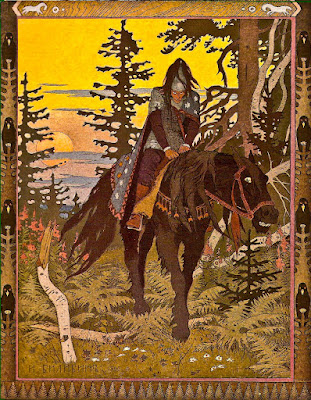
Related image
The Black Horseman by Ivan Bilibin, 1900
New Rules

Lukomorye adds a lot of new rules, many of which are welcome additions and many of which seem unnecessary. There's a new equipment list, a wound system, changes to combat rules, downtime activities, an overhauled rest system, and a whole host of new adventuring rules. There's also a few more old school additions, like morale rules and encounter distance tables. I like the overhauled equipment and item list as well as the accompanying market rules. There's an impressive list of items to buy and services to pay for, which speak to a deep engagement with history on the part of the author. If you could find it in a 14th century Russian market, you can find it in this book. Armor has received the most changes, heavy armor as a category no longer exists and is replaced by accessories such as helmets and greaves. There's also a quite clever set of rules for determining what's in stock which is simple and seems easy to apply even to items not covered in the sprawling lists provided.

There's also a lot of changes made to combat through the wound system and other rule additions. Generally, the changes made make for a grittier game where combat is not exactly more lethal but more impactful, more risky to limb and to equipment. The wound, or impactful hit, system checks a couple of important boxes for me, it's clear when you need to roll on it and offers specific descriptions of wounds, but determining what kind of wound is garnered and what it does is an extremely complicated process. I can imagine using this system but I can't imagine it being intuitive. As for the other rules, they seem good if a little bit too fiddly at times but add a healthy helping of realism. I'm a fan of the Fighting Against Multiple Opponents rule and the penalties for firing missile weapons into melee, but the rules for determining if bow strings snap seem a bit much for me. I'd recommend that a DM should take a good look at all these rules before deciding which they'd like to use. In regards to the morale rules, I'd say I'm conflicted. I think having this type of rule system in 5e is a good idea but the solutions Lukomorye provides seem like blunt instruments. In the text, there's no suggestion that some creatures might not make morale checks at all (e.g the undead) or that player actions beyond presenting a more significant force might be able to shake enemy morale. In the hands of a DM familiar with using morale rules I think Lukomorye's are good, especially in how they give enemy leaders options for boosting morale, but most 5e DMs aren't familiar with such systems and better guidelines for using  both the morale and pursuit rules would be a great help. As for the new rest system, I can take it or leave it, it's interesting in how it makes hitdice and the accommodation the party is resting in more relevant, but it might be easier just to stick with the gritty healing rules found in the DMG.

The rest of the rules for exploration, social encounters, physical feats, and downtime activities are a mixed bag. There's a lot of tables with difficulty classes for tasks associated with different skills and while they seem like good guidelines they often give DCs to things which players should just be able to do, like tie a knot, or notice the smell of a rotting corpse. I take similar issue with the complicated rules for catching thrown objects and other physical feats. Other sets of rules, like the perception check rules which invent the term 'perception champion' to be more clear, feel over complicated. It seems like these rules are trying to do the job of a competent DM, who should be able to feasibly determine what actions a player can accomplish without a check by their own intuition. Nonetheless, some of the rules here, like the table for encounter distance in different terrain types, and the reaction roll rules found in this book are all great additions to 5e and useful tools for the DM to use. Also, I will give Boris a great deal of credit though for noting that the rules I complained about above are to be used at the discretion of the DM. Finally, the downtime activities. I'm generally positive about these, some of them are a bit overwritten but all of them have interesting complications and I can easily imagine my players being interested in all of them.

Notes on the Appendixes

In addition to the content I've already discussed, there are a few appendixes to the player's guide which provide information on the realms, religions, and calendar of Lukomorye. These are all good sections. They do a wonderful job of navigating the gulf between mythology and history. I really appreciate how the organization of the realms, which all have a great fairy-tale vibe, is treated as a debated subject, as opposed to the objective organization of the planes of vanilla D&D. I'm also impressed by how seriously both the pseudo-Christianity of Lukomorye's True Confession and the pagan-inspired Old-Faith are taken. The perspectives of both religions are considered and a clear picture is painted both of how they see themselves and each other. It's also nice to have the calendar included in the book, though I'd like to get a calendar with the holidays marked that I could print out.


More than Content

So that's the Lukomorye Player's Guide. Though DMs may choose what they choose to use in it, I think it's all been put together for a purpose which goes beyond what is stated in the book's text. The introduction to the guide outlines the sources of inspiration for Lukomorye and gives the impression that the goal of this book is to provide rules substitutions and new character options which evoke both Russian fairy tales and 14th century Russia. However, many of the rules substitutions do not further this goal. The morale system, for example, doesn't strike me as particularly Russian. This is not to say that these rules have no place in this book, rather I'd like to suggest that the rules presented here are working at dual purposes. 

On one hand this book is developing a set of rules for the Lukomorye setting and on the other hand its rules work to encourage a certain style of game, a style we should have a clear idea of if we want to use this book effectively. I think this style of play can be understood best if we consider Lukomorye in the context of Boris' other writings, particularly his essays: 'Far-From-Equilibrium 5e', 'The Sociology of the Murderhobo' and 'Putting More Class In Your Setting'. These essays all express a dissatisfaction with 5e and put forth new ways of approaching D&D, usually with the help of examples from history. We can see evidence of the influence of all these essays on the Lukomorye Player's Guide.The influence of 'Far-From-Equilibrium 5e', which offers concrete mechanical suggestions for moving 5e toward a less 'balanced' style of play, is most obvious. Almost everything the essay suggests, from the coven rules for Warlocks to the wound system, make their way into Lukomorye. Even the more theoretical essays influence the book. The impact of 'Putting More Class In Your Setting', with its arguments for imagining class as representative of "concrete social groups", can be seen in the Priest's deep connection to the institutions of the Church and the tables included for each Calling which associate them automatically with different companies and covens and mentors. Similarly, 'The Sociology of the Murderhobo' also suggests a view of adventurers as people who are deeply involved in society, or who adventure to make social gains. The essay's focus on the 14th century as a time which provided the perfect conditions for adventures to operate is reflected in Lukomorye's choice of the 14th century to ground its historical aspects.

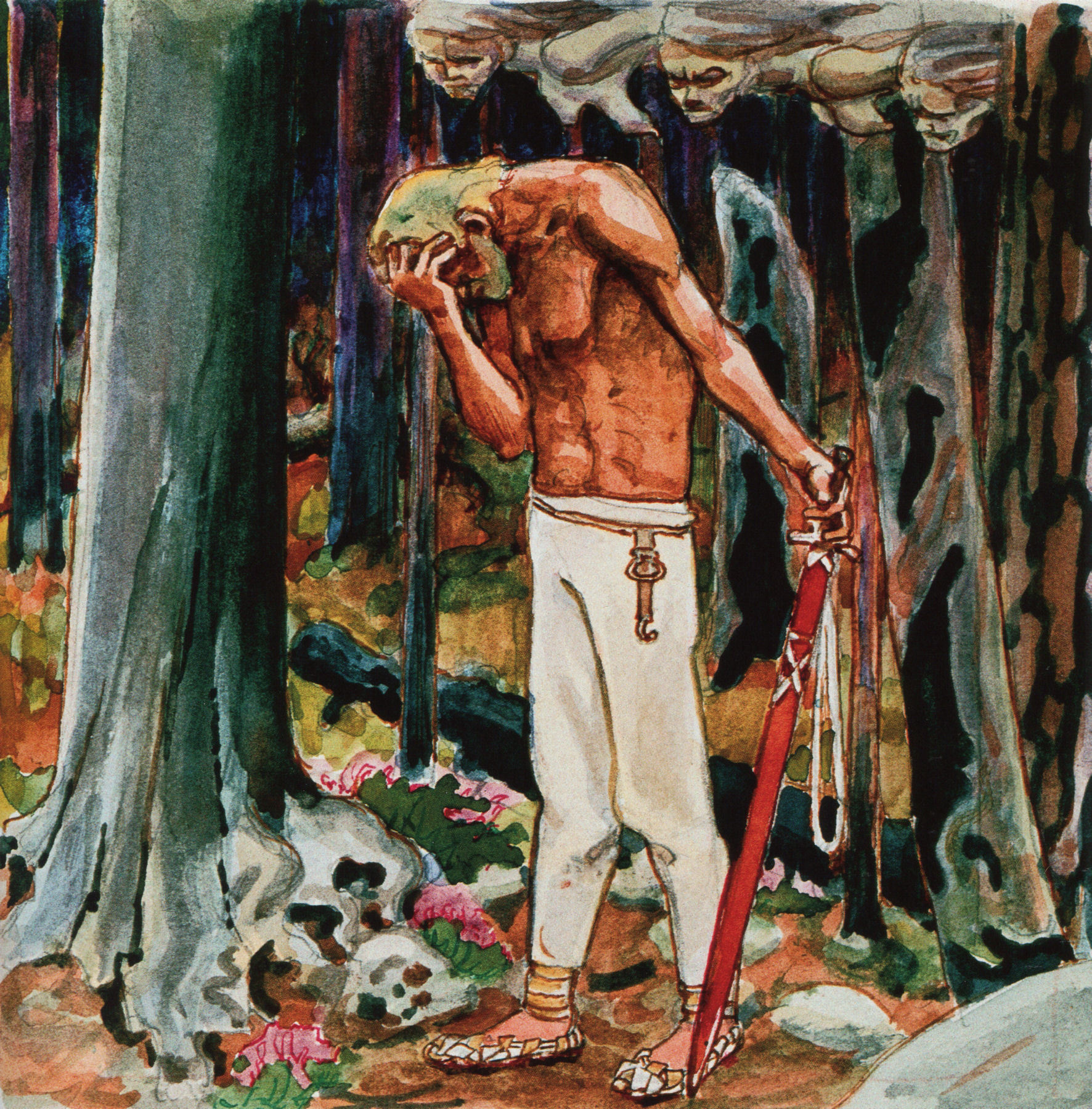
All these essays taken together with the rules in the Lukomorye Player's Guide paint a picture of a rather gritty sort of game, one whose PCs are deeply embedded in society or have numerous social obligations, one whose PCs are liable to die ignominiously in pursuit of power, a game of brutal but subtle politicking among the opportunistic factions of Nor, of heroes who claw with bloody hands from the anonymity of history to take their places as kings or prophets or revolutionaries. However, I think this style of game might conflict with the fairy-tale aspirations of Lukomorye. The protagonists of fairy tales do not start off at level 1, they are born heroes, they don't have to worry about getting frostbite or having their bow strings snap at an inopportune time. Yet Lukomorye paints such a compelling picture of a fairy tale adventure too, with its Pushkin poetics and romantic paintings, before the sense of heroism is drowned in rules for getting arsenic poisoning and shooting your friends in the back by accident. I'm skeptical that you can have a game that checks both boxes, that can be full of fairy tale heroics and gritty historical drama. I think how well running a game in Nor goes may depend on which side of this dichotomy you want to lean on. I'm still not sure that these two tones can't be combined but if I were to attempt this feat I'd want to play a game about fairy tale antiheroes who might be capable of great heroics but are dogged by their own flaws. I'm reminded of Kullervo, the tragic hero from the Finnish Kalevala, who was born with magic and ignored his family's warnings to pursue revenge. He's a character who I can imagine performing deeds of valor one day and starving to death under the high pines the next, one who might provide a model for a game as historical as it is mythological.

Repentant Kullervo by Aski Gallen-Kallela, 1918

Final Thoughts

The Lukomorye Player's Guide is a fascinating project which blends Russian legend and history to propose a direction for 5e that I don't think it's been taken before. Sometimes the strength of the mechanics it uses to describe its world are not as strong as its vision but its deep attention to grounding itself in the sources which inspire it is consistently impressive and gives the impression of a believable and compelling setting. So read Lukomorye. If you want to run 5e with more staple rules of OSR games like morale and reaction rolls read Lukomorye. If you want your combat to be messier and grittier read Lukomorye. If you have been desperate to see a Russian D&D world which feels authentically Russian in a way which goes beyond cliche read Lukomorye.


You can download the latest draft of the Lukomorye Player's Guide for free here 

Update: Boris has written a response to my review, which you can read here


This post is dedicated to St. Cyril and St. Methodius